It is said of L.A. that there is no there there. Is the same true of the soul?
Consider the Catholic conception of the Eucharist, best as I understand it. The Creator of the universe who stands outside of time, place and matter entered into creation about two thousand years ago in the form, first, as a zygote, then, with time, as a fully developed human being. While in material form He also maintains the attributes of the Creator who exists outside of the material world. He dies and ascends to heaven. Later he reenters the material world but this time with the physical attributes of bread and wine. God in his entire being and glory is then eaten by human beings. God, however, does not lose any essence or unity of his being while being digested by discrete pieces of creation.
All that is interesting and really attractive to my way of thinking though I am not officially a Catholic. I especially love what it implies about human beings. It implies that we are at some level made for eternity and infinity, and in fact some part of us is already eternal and infinite. Otherwise how else could God enter into us, spiritually speaking? I believe most people really know this in their guts even if they’ve never heard of the Eucharist. That’s why part of our reaction to hearing that someone has died, even before grief kicks in, is surprise and denial. But this is a revealing reaction. Why in the world should we be surprised when someone dies, when dying is the only obvious thing in the world that binds human beings together?
We are always surprised by death because our metaphysical default expectation is biased in favor of the continuation of life. That anyone is born alive, or born at all, is a far greater surprise than death given the inhospitality of the universe toward life. Vast expanses of vacuum-empty coldness studded with dots of nuclear-fusion seems pretty much to be the order of the universe. Not exactly a cosmic petri-dish for the incubation of life. And yet the miraculous introduction of life into an overwhelmingly inert universe never surprises us.
Death secretly strikes us as unnatural, despite the lies we tell one another. We know that death is a reflection of metaphysical disorder and in violation of our intuitive connection with eternity.
But I digress. The Eucharist indicates that human beings are infinite and eternal (at least in some ways) and this bodes poorly for our self-understanding. The mind (or my mind at least) is far from infinite, and so its task of understanding the self is beyond its capacity. But this lack of self-understanding dignifies us because it means we cannot be reduced to social forces, or chemicals, or as products of our rearing. We are always bigger than these things. In a very real sense, one human being is in an important sense larger than the rest of the material universe. And the fact we are also made to attempt to discover who we really are means we live in continuous frustration. Or at least I do.
This frustration ultimately redeems us, however, precisely because to understand who we are we must seek the One who is infinite and eternal through and through. There is a there there in the soul but we cannot find it ourselves.
 This was a summer of reunions for me. The family reunion was my first in years, and it was perfectly pleasant. I enjoyed catching up with cousins with whom I hadn’t spoken in years, and it was fun introducing my children to relatives who already loved them for no other reason than that they share the same blood. Sadder, however, was witnessing the real and marked decline of my older aunts and uncles. I remind myself that I should be so fortunate to have younger nieces and nephews looking at me with pity someday for being so old.
I also went to my twentieth high school reunion, which was not surprisingly far more anxiety producing. High school seems secondarily about education and far more about finding a place in the social universe and working through powerful emotions, most notably love and envy and sometimes envy on account of love.
One change all for the better from the ten year reunion is that most folks were far more relaxed and less anxious about impressing their classmates. Most of the guys had more-or-less let themselves go in appearance, while the females were still perfectly presentable. There might be a selection process at work here, with females insecure about their appearances more likely than the males to forgo the reunion altogether.
For me the reunion was like an emotional depth-charge detonated in psychic waters more shallow than I might have guessed. My own sense is that most people’s “emotional memories” are fairly short. Once out of sight and out of one’s life, emotions linked to persons and events naturally begin to fade. Their memories are like afterimages of the sun burned in the eye that fade quickly with time. In contrast to that, as long as I can remember the past has held a kind of tyrannical grip on my mental well-being. I remember at the age of twelve thinking about events that happened at age six with vivid freshness and intensity, and I remember wondering why the “now” has emotional privilege over past events. Surely at some level the past has as much Being or perhaps more so that the present, which is of course radically incomplete. I continue to remember with intense vividness past social blunders I committed as well as occasions I slighted people, whether intentionally or otherwise. My ego has taken a whipping from these memories. These memories, over time, become the equivalent of well-traveled ruts in my mind.
As a result, my impulse at the reunion was confessional, and I had to fight the desire to apologize for words and deeds that I’m almost perfectly certain have been long-ago forgotten by everyone but me.
 Is C.S. Lewis one of your favorite Christian writers? Do you think Schindler’s List is a great movie? Do you like Impressionist paintings more than contemporary art? Is Robert Frost your idea of a good poet? Does a cathedral impress you more than Bauhaus minimalism? Does seeing the St. Louis Gateway Arch up close and personal give you goose bumps?
If you answer yes to more than one of these questions, then your taste is decidedly Middlebrow.
Welcome to Middlebrow world. Welcome to my world.
What is Middlebrow? I’m not exactly sure, but for starters it means neither Highbrow nor Lowbrow. What is Highbrow? Here’s my stab at it: Highbrow aims at art for its own sake, art that transcends (and often offends) cultural sensibilities, art that provides something original, something shockingly new to the viewer. For that reason alone Highbrow art is likely to be rejected by most people as either useless or immoral. The reward of Highbrow art is, first, the art itself, but, second, the status it confers on its followers as elites who live in the rarified air far above the maddening crowd. Lowbrow art, very much like high art, also aims at art that is its own reward, but this art taps into the most common (and therefore vulgar) tastes of a culture’s sensibilities. Rather than challenging the culture, lowbrow completely gives in to its lowest inclinations and at some point becomes indistinguishable from entertainment.
So what is Middlebrow? Middlebrow art is art that attempts to create something beautiful and challenging but that challenges us without rejecting our cultural sensibilities—or, at least, not all of them. Middlebrow art attempts to serve as a source of moral edification that is drawn, to paraphrase Lincoln, from the better angels of our culture. Middlebrow Art often wants to teach us something and not merely exist for its own aesthetic warrant—unless that aesthetic warrant is beauty.
The Middlebrow audience is scorned by elites for not being transgressive enough, for being too wedded to vulgar, bourgeoisie values. It is mocked by lowbrow fans for being pretentious. Both charges may be correct. I somehow suspect, however, that the single best measure of the health of a civilization is the size and intellectual vigor of its Middlebrow audience, the audience that seeks pleasures of the mind but that also understands itself as having been given a cultural heritage worthy of moral defense and protection.
 The British economist J.M. Keynes apparently would summarily judge people’s character by the quality of their hands. Okay, that’s nuts. Still, I confess to being drawn to hands myself. I love all manner of hand gestures in the movies, big and small, and I, too, notice people’s hands quite carefully. Unfortunately, my own hands say, “meat cutter at the deli” more so than “aristocrat,” but one lives with the hand one was dealt. (Sorry, couldn’t resist.) This picture is of Harvey Hill’s hand, taken backstage of a college theater. By the way, Harvey is a terrific model chiefly for one reason: he poses exactly as I ask him without question or complaint. He lets me be the photo tyrant I was born to be. We’ll be walking along a path, and I’ll say, “Hill, put your face in that hole in the tree so I can take a picture.” In goes his face. He’s good that way.
 Last summer our family went to the beach. As we were walking up to the waves, I admonished my children from taking their disposable cameras into the water. Literally within thirty seconds of offering this bit of parental wisdom, I immediately proceeded to go into the water, bend down to pick up a shell, and have a wave hit my own (six-month old) digital camera which was hanging from my neck on a strap. I then did the worst thing imaginable, which was to turn the camera on and off multiple times, shorting it out permanently. I immediately sensed my photo Mojo disappearing from my soul like water leaving a sieve. That was some six or seven months ago, and I haven’t been able to recover it. I still own a digital camera, the one with which I took most of the pictures on this blog. But I am still lacking not only the desire to take pictures but also the eye. Before the incident, I was beginning to view the world as a photographer; now, I have no eye for composition. Very sad. How does one recover Mojo? Is it the case, once lost forever lost?
In tribute to my lost camera, I post here one of the first pictures I took with it. Marbles in a mason-jar lid, resting on the bathroom floor and lit by a flashlight.
 To consult one’s memory is to consult what one hopes is the accurate engraving of reality on the soul itself. Odd, isn’t it, that we must always turn inwards—by consulting reason, memory, feelings, or conscience—to make sense of the world outside of us. That inward life is never directly discernable by anyone but ourselves, and it’s not even clear to us what’s going on within us. Is our soul like a museum that a visitor, the real me, the self, walks through at his leisure? Or is the “real me” the museum itself becoming aware of itself selectively and discursively?
A weak or thin internal life is dry, flat, and subject to the buffeting of the outside world. A world lived entirely inside oneself is either the mark of genius or, more often, the clinically insane. As I’ve grown older, I’ve found that I live within myself more and more--that is, I take pleasure increasingly by my own internal dialogues and games--and perhaps for this reason (as I'm no genius) I worry at what stage one knows—or can know—when one is going insane.
 A funny and really smart buddy of mine, Tom Hornack, once told me a story about an Indian "tracker" who taught a white friend of his how to "read" the land. The key to close observation is...big surprise here...to actually look around. But the point, said the Indian, is that too many people simply do not know how to look about oneself. For instance, while walking on a path most people look left and right, but their vision is always eyes-high. They don't crouch, look up, move a bit off the track—simple things. To really see we need to look at things from more than one perspective, to force oneself also not to block out what one ordinarily blocks out, and to make visible which, for most purposes, is typically invisible to oneself. That’s part of the reason why when we enter a person’s house we instantly notice all manner of things the homeowner has not noticed or, more likely, once noticed but has now “forgotten.”
 The following is an excerpt of a speech I gave as commentary to the film, "Requiem for a Dream."
Addiction blots out everything else but the object of addiction in this world for the addict. At its most extreme the object of addiction becomes the one and only thing the addict is willing to live and, all too often, die for. The kaleidoscopic diversity of life’s experiences and the playful and infinitely nuanced subtleties of our own inner life and personality are stomped out by the addiction, and all that remains is the desperately urgent desire that pleads, screams, lies, cheats, and, if necessary, murders for more, more, and more. When your arm is healthy, you hardly notice it at all. But when you fracture your arm, it cries out for attention. Perhaps the soul is like this as well: A well-ordered soul does not bring attention to itself but a fractured soul screams and screams and screams.
The heart of addiction is misplaced and deadly longing. All of us ultimately desire to be whole, to be at peace with ourselves, to fill what often feels like a terrifyingly large void in our Being. At the more practical level, what we want at any given time is a change in moods away from boredom and anxiety and self-loathing and crushing insecurity toward, well, anything else. We seek to change, control, and manipulate our mood through ear-splitting music, through video games, through tv and movies, through masturbation and sex, through gossip, through mindless text messaging, through drinking, through changing our clothes multiple times in a day, through shopping, through reckless stunts, through snacking, and on and on.
Most activities are harmless when pursued in moderation. Other mood altering activities, doing drugs being but one example, are a trap. Addictions do not merely involve intense desires. We all have intense cravings from time to time, but these are not necessarily addictions. Addictions are both interesting and devastating because of what they do to our mind or soul. They essentially place the soul or mind on the foundation of a lie, and they convince the person that the only way to fix that lie is by more of the same. Cocaine gives people the feeling of being invincible and heroic without the troublesome prerequisite of doing anything heroic at all. One of the worst problems about the highs of drugs is that it renders ordinary life boring, flat, comparatively unpleasurable. Now for most of us, a good deal of life is a struggle against boredom. But addiction makes that struggle an impossible battle. Like the hardened soldier who returns home from extended combat and discovers that relaxing on the porch swing is no longer charming but merely irritating, drug addicts find regular life insufferable. Who wants to tidy up the house when, with a few snorts, you can instead become king of the world?
If we are to be honest, most of us desire to be invincible and heroic. But consider the following thought experiment proposed by the recently deceased Harvard philosopher, Robert Nozick. Nozick asks us to imagine what he calls “The experience machine,” a box that, were we to step inside it, we could have the illusion of experiencing anything we desire. We could have the perfectly real perception that we are in a WWII battle or in a Roman orgy or winning an Olympic race. Now all of us would be tempted to step inside from time to time, but Nozick asks us this: Imagine that the box works such that once you go in you can’t come back out. Now if you do go into the box you can live out every fantasy you’ve desired or can ever desire in the future. Or, perhaps you could step inside the box to experience your life just the way it is but without its aggravating features like getting sick, going to the dentist, or taking finals. Your perception of that reality would feel perfectly authentic, but your physical body would be in box.
The reason most of us would not go into the box is because most of us know, even if we can’t articulate it, that reality itself has value independently of the pleasures we derive from it. Feelings and pleasures are not the only thing in the world, nor are they often the most important thing. Addiction diabolically persuades the mind that the feeling one gets from satisfying the desire—that feeling, that curious blend of rush, thrill, relaxation, and comfort that says, “Home, at last”—is the one and only thing that matters. But after the rush, the drop ensues. After the euphoria has dissipated the self gives rise to anguish, despair, physical misery, profound and crushing guilt, and repeated sacred pledges never to do it again. In turn, these feelings of anguish, the addict is convinced, can only be solved by one thing, by the only thing that brings consolation: satisfying the addiction one more time, this time surely the last time. And of course the cycle continues on and on forever until death or some other drastic intervention ensues because what is being sought ultimately by the addict—that is, wholeness-- cannot be satisfied by the addiction. And even as what is being sought not ultimately but RIGHT NOW, feeling good, is harder and harder to satisfy, the addict can think to use the only tool he has in his toolbox, and that happens to be that drug that gives him temporary release from himself.
The addict goes to war with himself and with anyone else who gets in the way of his fix. One of the most interesting devices in the movie was the use of the split shot. The director used the split shot at least three times: between Harry and his mother; between Harry and his girlfriend; and between Harry and himself in a mirror. With the integrity of the psyche shattered, the addict is torn, rendered schizophrenic between his desires and his judgment. At some point in the addiction, that basic attribute of human agency, free will, is lost, and it is not recovered again until the self is abandoned altogether, until the addict hits rock bottom. Until he or she becomes helpless, like a baby, she lives a life of imprisonment.


 One of my favorite portraits; one of my favorite guys. I flatter myself to think the picture captures a glimpse of Harvey's depth and compassion.
 Look carefully at the picture for about 5-10 seconds. You should see a girl's face.


 Taken at Deana Rose Children's Farmstead, Overland Park, KS
 The force that through the green fuse drives the flower
 And all shall be well and


 It is said of L.A. that there is no there there. Is the same true of the soul?
 This was a summer of reunions for me. The family reunion was my first in years, and it was perfectly pleasant. I enjoyed catching up with cousins with whom I hadn’t spoken in years, and it was fun introducing my children to relatives who already loved them for no other reason than that they share the same blood. Sadder, however, was witnessing the real and marked decline of my older aunts and uncles. I remind myself that I should be so fortunate to have younger nieces and nephews looking at me with pity someday for being so old.
 A picture from the bakery in Chicago we went to with our families. This colorful confectionary display is as close to a "birthday card" as I can conjure up. I really appreciate you and your whole clan, Technoprairie.
 If we have only hoped in Christ in this life, we are of all men most pitiable. 1 Corinthians 15:19
 Many of my pictures aim at dramatic contrasts of light and dark. Something about it moves me and stirs my imagination. I seek this effect principally with my photo portraits, but I have chosen not to show these pictures on this blog.
 Is C.S. Lewis one of your favorite Christian writers? Do you think Schindler’s List is a great movie? Do you like Impressionist paintings more than contemporary art? Is Robert Frost your idea of a good poet? Does a cathedral impress you more than Bauhaus minimalism? Does seeing the St. Louis Gateway Arch up close and personal give you goose bumps?
 The British economist J.M. Keynes apparently would summarily judge people’s character by the quality of their hands. Okay, that’s nuts. Still, I confess to being drawn to hands myself. I love all manner of hand gestures in the movies, big and small, and I, too, notice people’s hands quite carefully. Unfortunately, my own hands say, “meat cutter at the deli” more so than “aristocrat,” but one lives with the hand one was dealt. (Sorry, couldn’t resist.) This picture is of Harvey Hill’s hand, taken backstage of a college theater. By the way, Harvey is a terrific model chiefly for one reason: he poses exactly as I ask him without question or complaint. He lets me be the photo tyrant I was born to be. We’ll be walking along a path, and I’ll say, “Hill, put your face in that hole in the tree so I can take a picture.” In goes his face. He’s good that way.
 Last summer our family went to the beach. As we were walking up to the waves, I admonished my children from taking their disposable cameras into the water. Literally within thirty seconds of offering this bit of parental wisdom, I immediately proceeded to go into the water, bend down to pick up a shell, and have a wave hit my own (six-month old) digital camera which was hanging from my neck on a strap. I then did the worst thing imaginable, which was to turn the camera on and off multiple times, shorting it out permanently. I immediately sensed my photo Mojo disappearing from my soul like water leaving a sieve. That was some six or seven months ago, and I haven’t been able to recover it. I still own a digital camera, the one with which I took most of the pictures on this blog. But I am still lacking not only the desire to take pictures but also the eye. Before the incident, I was beginning to view the world as a photographer; now, I have no eye for composition. Very sad. How does one recover Mojo? Is it the case, once lost forever lost?
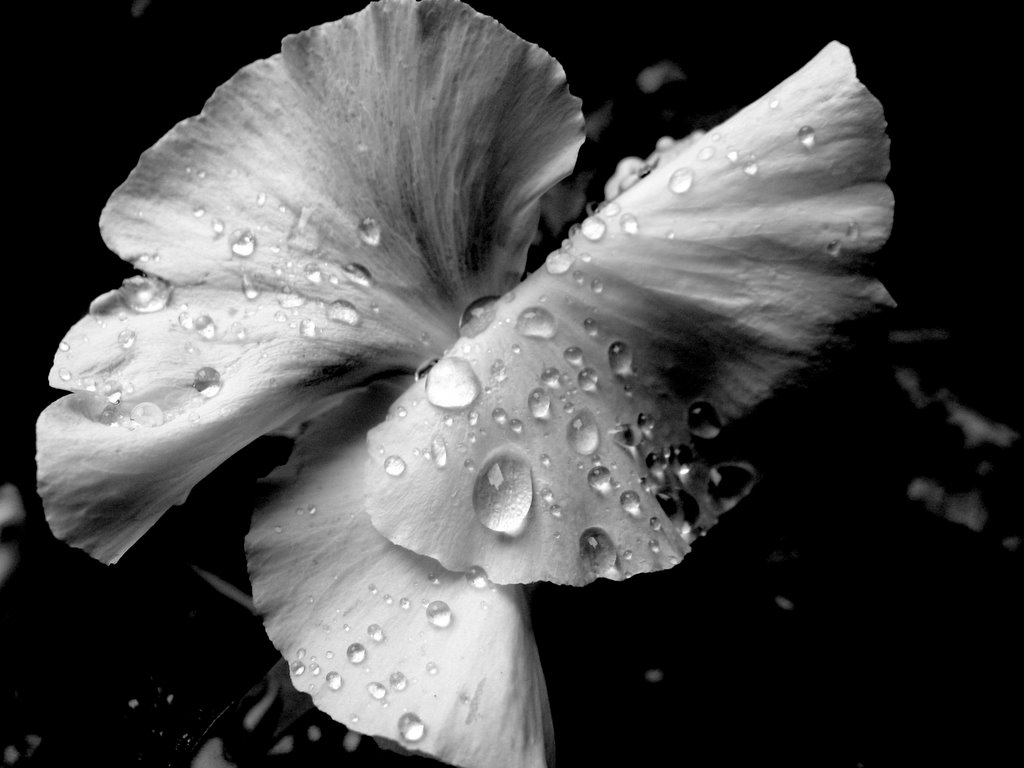 Happy Valentine's Day. Here's what my seven year old daughter wrote today about love, copied here verbatim. "There is lots of love in the world. People get married, kids get adopted by nice people, cousins kiss, Grand Parents hug and bake choclet cakes before relatives ariving. But if you mesure up all the love in the world it won't mesure to God's love. He put his only son on earth to die on the cross to take the place of even the worst men in the whole world! He loves you more than you think he does. He loves you more than your parents love you. No matter how many bad things you do God loves you just as much. He loves everybody equally! Thats some love all right!"
 This photograph is all sharp angles and primary colors. One can be driven to madness as a parent thinking of all the possible ways in which the hard, sharp angles of the world can bring violence to our children's (and our own) comparatively forgiving tissue and blood. The hearth in my home is (I just know it) a trip to the emergency room waiting to happen.
 So I was waiting for my wife to pick me up at work and, bored, I wandered over to look at a tree. Looked at all the moss and lichens and began to wonder: How many living organisms are on this tree! How does one count the number of moss? And how about stuff sharing the same root structure? Are they one or a bunch? Or just a living glob? Now surely any decent biologists could answer these questions—and of course are welcome to do so--but the deeper question of how we distinguish between closely connected things is a real one, not so easily answered.
 To consult one’s memory is to consult what one hopes is the accurate engraving of reality on the soul itself. Odd, isn’t it, that we must always turn inwards—by consulting reason, memory, feelings, or conscience—to make sense of the world outside of us. That inward life is never directly discernable by anyone but ourselves, and it’s not even clear to us what’s going on within us. Is our soul like a museum that a visitor, the real me, the self, walks through at his leisure? Or is the “real me” the museum itself becoming aware of itself selectively and discursively?
 A funny and really smart buddy of mine, Tom Hornack, once told me a story about an Indian "tracker" who taught a white friend of his how to "read" the land. The key to close observation is...big surprise here...to actually look around. But the point, said the Indian, is that too many people simply do not know how to look about oneself. For instance, while walking on a path most people look left and right, but their vision is always eyes-high. They don't crouch, look up, move a bit off the track—simple things. To really see we need to look at things from more than one perspective, to force oneself also not to block out what one ordinarily blocks out, and to make visible which, for most purposes, is typically invisible to oneself. That’s part of the reason why when we enter a person’s house we instantly notice all manner of things the homeowner has not noticed or, more likely, once noticed but has now “forgotten.”
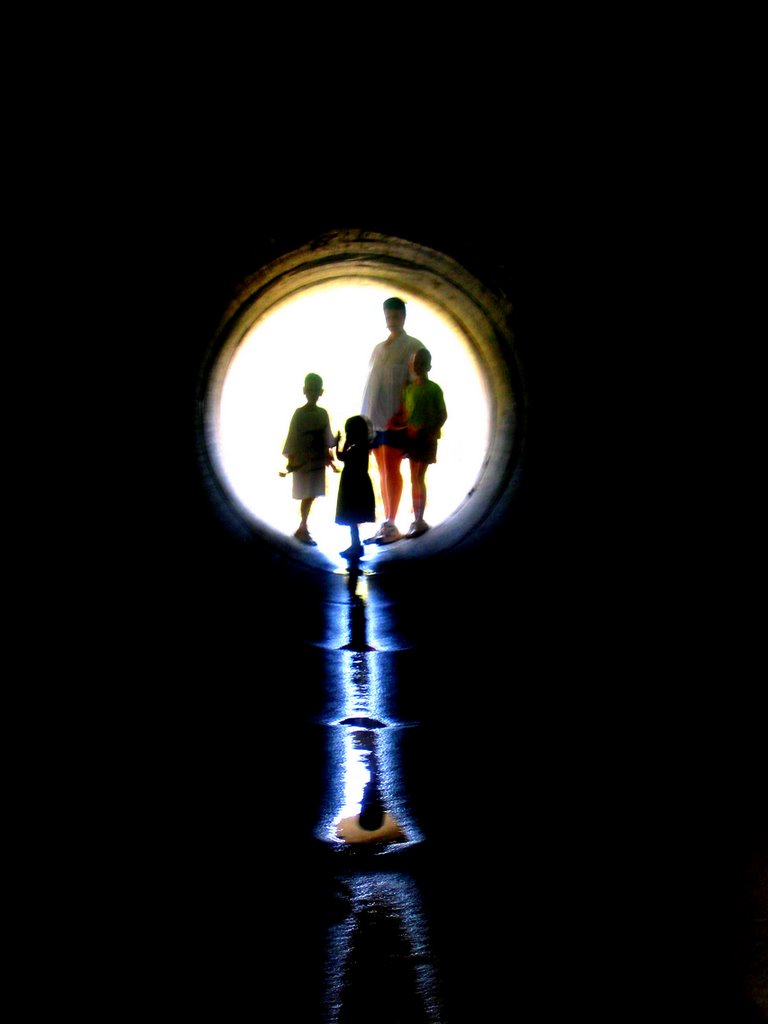 Tunnels are a great metaphor for any number of situations and even for life itself. Tunnels connote both a journey (and therefore purpose) as well as restriction of movement. Much indeed like life.
 The following is an excerpt of a speech I gave as commentary to the film, "Requiem for a Dream."
 Spring, the dormant natural world resurrected into birth, growth, blossoming, life itself. Skeptics would have us believe that our theological fancies are but extensions of the natural concepts themselves—i.e. Easter Christianizes our experience of spring--that religion is but a fictitious analogue of the natural world. Isn’t it just as likely that this world was made as it is precisely to give us a taste of what is to come, that this world partakes just a little bit in the transcendent world to which it points? There is a cart and a horse, but the skeptics reverse their proper order.


 Posts