 Last summer our family went to the beach. As we were walking up to the waves, I admonished my children from taking their disposable cameras into the water. Literally within thirty seconds of offering this bit of parental wisdom, I immediately proceeded to go into the water, bend down to pick up a shell, and have a wave hit my own (six-month old) digital camera which was hanging from my neck on a strap. I then did the worst thing imaginable, which was to turn the camera on and off multiple times, shorting it out permanently. I immediately sensed my photo Mojo disappearing from my soul like water leaving a sieve. That was some six or seven months ago, and I haven’t been able to recover it. I still own a digital camera, the one with which I took most of the pictures on this blog. But I am still lacking not only the desire to take pictures but also the eye. Before the incident, I was beginning to view the world as a photographer; now, I have no eye for composition. Very sad. How does one recover Mojo? Is it the case, once lost forever lost?
In tribute to my lost camera, I post here one of the first pictures I took with it. Marbles in a mason-jar lid, resting on the bathroom floor and lit by a flashlight.
 To consult one’s memory is to consult what one hopes is the accurate engraving of reality on the soul itself. Odd, isn’t it, that we must always turn inwards—by consulting reason, memory, feelings, or conscience—to make sense of the world outside of us. That inward life is never directly discernable by anyone but ourselves, and it’s not even clear to us what’s going on within us. Is our soul like a museum that a visitor, the real me, the self, walks through at his leisure? Or is the “real me” the museum itself becoming aware of itself selectively and discursively?
A weak or thin internal life is dry, flat, and subject to the buffeting of the outside world. A world lived entirely inside oneself is either the mark of genius or, more often, the clinically insane. As I’ve grown older, I’ve found that I live within myself more and more--that is, I take pleasure increasingly by my own internal dialogues and games--and perhaps for this reason (as I'm no genius) I worry at what stage one knows—or can know—when one is going insane.
 A funny and really smart buddy of mine, Tom Hornack, once told me a story about an Indian "tracker" who taught a white friend of his how to "read" the land. The key to close observation is...big surprise here...to actually look around. But the point, said the Indian, is that too many people simply do not know how to look about oneself. For instance, while walking on a path most people look left and right, but their vision is always eyes-high. They don't crouch, look up, move a bit off the track—simple things. To really see we need to look at things from more than one perspective, to force oneself also not to block out what one ordinarily blocks out, and to make visible which, for most purposes, is typically invisible to oneself. That’s part of the reason why when we enter a person’s house we instantly notice all manner of things the homeowner has not noticed or, more likely, once noticed but has now “forgotten.”
 The following is an excerpt of a speech I gave as commentary to the film, "Requiem for a Dream."
Addiction blots out everything else but the object of addiction in this world for the addict. At its most extreme the object of addiction becomes the one and only thing the addict is willing to live and, all too often, die for. The kaleidoscopic diversity of life’s experiences and the playful and infinitely nuanced subtleties of our own inner life and personality are stomped out by the addiction, and all that remains is the desperately urgent desire that pleads, screams, lies, cheats, and, if necessary, murders for more, more, and more. When your arm is healthy, you hardly notice it at all. But when you fracture your arm, it cries out for attention. Perhaps the soul is like this as well: A well-ordered soul does not bring attention to itself but a fractured soul screams and screams and screams.
The heart of addiction is misplaced and deadly longing. All of us ultimately desire to be whole, to be at peace with ourselves, to fill what often feels like a terrifyingly large void in our Being. At the more practical level, what we want at any given time is a change in moods away from boredom and anxiety and self-loathing and crushing insecurity toward, well, anything else. We seek to change, control, and manipulate our mood through ear-splitting music, through video games, through tv and movies, through masturbation and sex, through gossip, through mindless text messaging, through drinking, through changing our clothes multiple times in a day, through shopping, through reckless stunts, through snacking, and on and on.
Most activities are harmless when pursued in moderation. Other mood altering activities, doing drugs being but one example, are a trap. Addictions do not merely involve intense desires. We all have intense cravings from time to time, but these are not necessarily addictions. Addictions are both interesting and devastating because of what they do to our mind or soul. They essentially place the soul or mind on the foundation of a lie, and they convince the person that the only way to fix that lie is by more of the same. Cocaine gives people the feeling of being invincible and heroic without the troublesome prerequisite of doing anything heroic at all. One of the worst problems about the highs of drugs is that it renders ordinary life boring, flat, comparatively unpleasurable. Now for most of us, a good deal of life is a struggle against boredom. But addiction makes that struggle an impossible battle. Like the hardened soldier who returns home from extended combat and discovers that relaxing on the porch swing is no longer charming but merely irritating, drug addicts find regular life insufferable. Who wants to tidy up the house when, with a few snorts, you can instead become king of the world?
If we are to be honest, most of us desire to be invincible and heroic. But consider the following thought experiment proposed by the recently deceased Harvard philosopher, Robert Nozick. Nozick asks us to imagine what he calls “The experience machine,” a box that, were we to step inside it, we could have the illusion of experiencing anything we desire. We could have the perfectly real perception that we are in a WWII battle or in a Roman orgy or winning an Olympic race. Now all of us would be tempted to step inside from time to time, but Nozick asks us this: Imagine that the box works such that once you go in you can’t come back out. Now if you do go into the box you can live out every fantasy you’ve desired or can ever desire in the future. Or, perhaps you could step inside the box to experience your life just the way it is but without its aggravating features like getting sick, going to the dentist, or taking finals. Your perception of that reality would feel perfectly authentic, but your physical body would be in box.
The reason most of us would not go into the box is because most of us know, even if we can’t articulate it, that reality itself has value independently of the pleasures we derive from it. Feelings and pleasures are not the only thing in the world, nor are they often the most important thing. Addiction diabolically persuades the mind that the feeling one gets from satisfying the desire—that feeling, that curious blend of rush, thrill, relaxation, and comfort that says, “Home, at last”—is the one and only thing that matters. But after the rush, the drop ensues. After the euphoria has dissipated the self gives rise to anguish, despair, physical misery, profound and crushing guilt, and repeated sacred pledges never to do it again. In turn, these feelings of anguish, the addict is convinced, can only be solved by one thing, by the only thing that brings consolation: satisfying the addiction one more time, this time surely the last time. And of course the cycle continues on and on forever until death or some other drastic intervention ensues because what is being sought ultimately by the addict—that is, wholeness-- cannot be satisfied by the addiction. And even as what is being sought not ultimately but RIGHT NOW, feeling good, is harder and harder to satisfy, the addict can think to use the only tool he has in his toolbox, and that happens to be that drug that gives him temporary release from himself.
The addict goes to war with himself and with anyone else who gets in the way of his fix. One of the most interesting devices in the movie was the use of the split shot. The director used the split shot at least three times: between Harry and his mother; between Harry and his girlfriend; and between Harry and himself in a mirror. With the integrity of the psyche shattered, the addict is torn, rendered schizophrenic between his desires and his judgment. At some point in the addiction, that basic attribute of human agency, free will, is lost, and it is not recovered again until the self is abandoned altogether, until the addict hits rock bottom. Until he or she becomes helpless, like a baby, she lives a life of imprisonment.
 It’s curious how many things that we find thrilling or enjoyable are also quite risky.
We can enjoy risky activities for one of two reasons:
1) Because of the risk; or,
2) In spite of the risk, that is, because we enjoy an activity that just happens to be risky--the fact it is also risky gives us no additional pleasure or even detracts from the pleasure.
Option (2) is unobjectionable. We experience this kind of pleasure all the time. Eating cake may carry some long-term health risk, but it is unlikely that the pleasure from doing so is enhanced by that knowledge. Therefore the more interesting option is (1). If we do in fact find pleasure in risk, we must further ask:
3) Is risk-taking pleasurable in itself?
4) Or, is it the case that risk-taking is not itself pleasurable but there are other goods that we do seek but are available to us only when risk-taking is involved.
The answer to (3) cannot be yes because we can think of too many risky activities that would bring us little pleasure at all (i.e. injecting oneself with the flu virus). Therefore insofar (1) is true—that we seek out some activities because they are risky—it must be because what we are seeking is not risk itself but something else that is most available to us during risky activities. What, then, do we seek that is most available to us during risk-taking? Honor or pride of overcoming fear or even concern for one’s own being is an obvious possibility. The seeking of honor at the expense of one’s bodily good is described by Hegel and Tocqueville as a noble or aristocratic impulse (as opposed to slavish concern for one’s own being even at the expense of one’s dignity). One can certainly be seeking to prove to oneself one’s own courage, as well as seeking the adulation of others who witness one’s courage. Another possibility is that what one seeks is diversion from one’s drub existence, the thrill of courting death which takes oneself out of one’s present situation, at least for a moment.
Perhaps more interesting yet is the kind of pleasure we receive from the appearance or feeling of something being risky when, in fact, we know we are perfectly safe—for example, watching a scary movie or riding a rollercoaster. Why do we invite fear when, in fact, we know we are safe? The answer to me is far from obvious and seems to invite the possibility that the human personality is bizarrely fractured, requiring a constant internal dialogue between what is real and fiction, and that finally we don’t know. If we really know the characters on the screen are following a script, would we in fact be scared? It’s doubtful. I doubt any of the stagehands who helped make the movie were ever frightened in its filming. Likewise, my guess is that riding a rollercoaster simply feels scary, regardless of our knowledge of its safety or not. What this seems to suggest is that we experience life at the gut level as well as the more-conscious cognitive level, and at least some of our thrills at risk behavior comes from a strong disjunction between the two.
 Here’s a photo of a pepper within a pepper. If that pepper contains a pepper within it as well, how many peppers are in that thing?! (Botanists, please note that this is a rhetorical question.)
Okay, let’s be honest: infinite regresses are big time fun. Or, at least they are by philosophy standards--which admittedly employ an extraordinarily low threshold for counting something as fun. (I mean, have you ever seen a portrait of Kant smiling? It’s also rumored that Hegel feared that laughter was the one thing in the universe that could disrupt the inexorable unfolding of reason in history.) But wherever we encounter infinite regresses—such as when we see ourself in a funhouse mirror or when we read “Horton Hears a Who”—we pause and wonder at the thing. One of the few philosophy jokes I know ends with the punch line, “It’s turtles all the way down.”
Infinite regresses are also unsettling. St. Thomas’ proofs for god runs something like this: nothing can cause itself and there cannot be an infinite string of causes going back in time, so therefore there must a prime cause (i.e. God). The proof hinges on the claim that there cannot an infinite string of causes going back in time. Is this a statement of logic or, just as likely, a reflection of our discomfort in not being able to tell a story about something without a proper beginning, development, and ending?
 Ancient Greek philosophers believed that the world has value even without a personal God intervening in human affairs. Christians believe that life and the world more generally receives its value from behind, lit, as it were, by a great sun. The Greeks believed, by comparison, that the world is self-illuminating. This is one reason Christians see atheism in such stark, almost hysterical terms: They find it hard to believe that life has any meaning at all without the Divine backlighting. In this sense, Nietzsche, Sartre, and other existentialists are in spirit more Christian than Greek; they buy into the Christian premise that life without a God is nihilistic. The Greeks seemed to have believed that seventy years of life is worth, at least, something. C.S. Lewis would agree with the Greeks but point to our yearnings for eternity to show how, finally, the Greek perspective cannot ultimately satisfy us.
 The monsters of other cultures--say, African or Asian monsters--always strike me as at least as comical as they are terrifying. One possibility is we have to be trained into fear, and I have not received the proper training to appreciate the horrors of Asian and African monsters. Another possibility is that what we fear, deep down, is the liminal, that is, that which has one foot in our world—the world in which we live and delude ourselves that we have mastered--and one foot in another world, a world altogether unknown and alien. That which is perfectly alien from our own experience is, well, neutral toward us. It is that which shares something with us that frightens us most: mutants; deformities; a corpse; vampires; speaking beasts, etc. Since African or Asian monsters emerge from a culture whose symbols do not gain traction with us, naturally their monsters seem simply "other" and therefore lack the immediacy necessary for terror.
 Last summer our family went to the beach. As we were walking up to the waves, I admonished my children from taking their disposable cameras into the water. Literally within thirty seconds of offering this bit of parental wisdom, I immediately proceeded to go into the water, bend down to pick up a shell, and have a wave hit my own (six-month old) digital camera which was hanging from my neck on a strap. I then did the worst thing imaginable, which was to turn the camera on and off multiple times, shorting it out permanently. I immediately sensed my photo Mojo disappearing from my soul like water leaving a sieve. That was some six or seven months ago, and I haven’t been able to recover it. I still own a digital camera, the one with which I took most of the pictures on this blog. But I am still lacking not only the desire to take pictures but also the eye. Before the incident, I was beginning to view the world as a photographer; now, I have no eye for composition. Very sad. How does one recover Mojo? Is it the case, once lost forever lost?

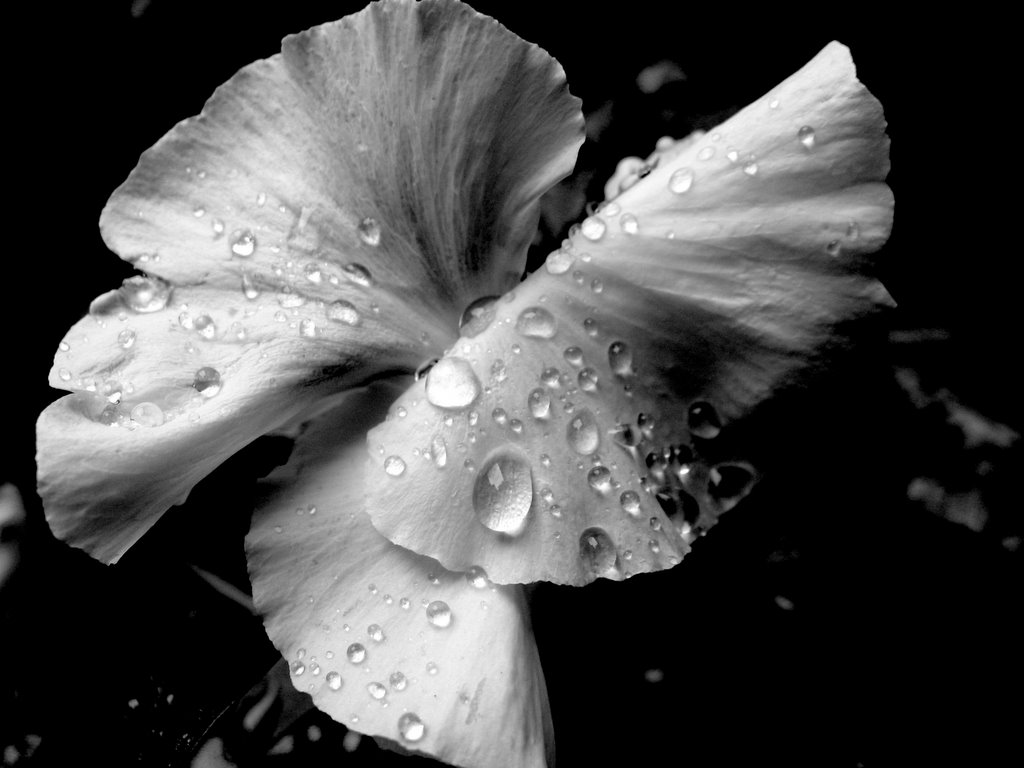 Happy Valentine's Day. Here's what my seven year old daughter wrote today about love, copied here verbatim. "There is lots of love in the world. People get married, kids get adopted by nice people, cousins kiss, Grand Parents hug and bake choclet cakes before relatives ariving. But if you mesure up all the love in the world it won't mesure to God's love. He put his only son on earth to die on the cross to take the place of even the worst men in the whole world! He loves you more than you think he does. He loves you more than your parents love you. No matter how many bad things you do God loves you just as much. He loves everybody equally! Thats some love all right!"
 This photograph is all sharp angles and primary colors. One can be driven to madness as a parent thinking of all the possible ways in which the hard, sharp angles of the world can bring violence to our children's (and our own) comparatively forgiving tissue and blood. The hearth in my home is (I just know it) a trip to the emergency room waiting to happen.
 So I was waiting for my wife to pick me up at work and, bored, I wandered over to look at a tree. Looked at all the moss and lichens and began to wonder: How many living organisms are on this tree! How does one count the number of moss? And how about stuff sharing the same root structure? Are they one or a bunch? Or just a living glob? Now surely any decent biologists could answer these questions—and of course are welcome to do so--but the deeper question of how we distinguish between closely connected things is a real one, not so easily answered.
  To consult one’s memory is to consult what one hopes is the accurate engraving of reality on the soul itself. Odd, isn’t it, that we must always turn inwards—by consulting reason, memory, feelings, or conscience—to make sense of the world outside of us. That inward life is never directly discernable by anyone but ourselves, and it’s not even clear to us what’s going on within us. Is our soul like a museum that a visitor, the real me, the self, walks through at his leisure? Or is the “real me” the museum itself becoming aware of itself selectively and discursively?
  A funny and really smart buddy of mine, Tom Hornack, once told me a story about an Indian "tracker" who taught a white friend of his how to "read" the land. The key to close observation is...big surprise here...to actually look around. But the point, said the Indian, is that too many people simply do not know how to look about oneself. For instance, while walking on a path most people look left and right, but their vision is always eyes-high. They don't crouch, look up, move a bit off the track—simple things. To really see we need to look at things from more than one perspective, to force oneself also not to block out what one ordinarily blocks out, and to make visible which, for most purposes, is typically invisible to oneself. That’s part of the reason why when we enter a person’s house we instantly notice all manner of things the homeowner has not noticed or, more likely, once noticed but has now “forgotten.”
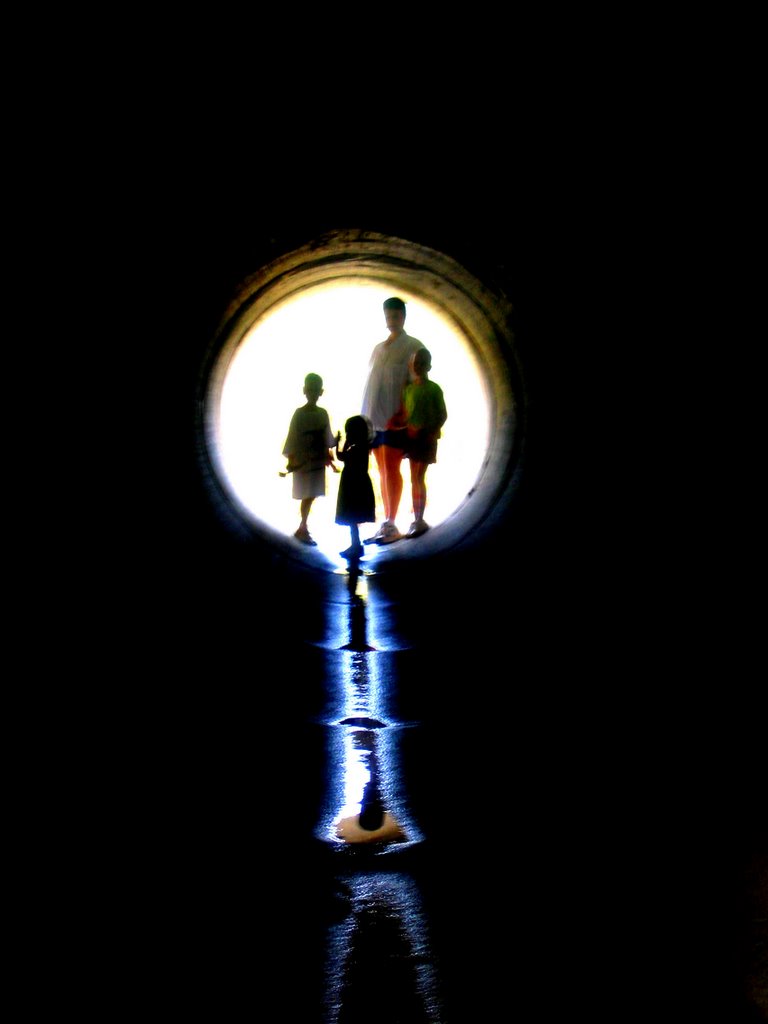 Tunnels are a great metaphor for any number of situations and even for life itself. Tunnels connote both a journey (and therefore purpose) as well as restriction of movement. Much indeed like life.
 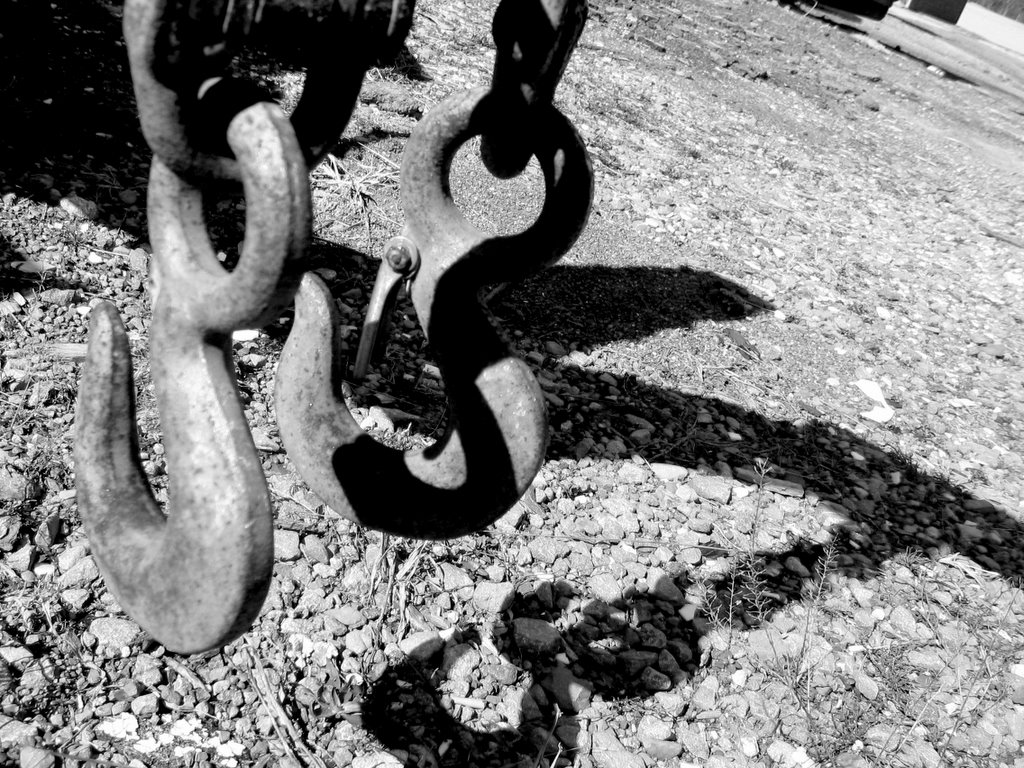 The following is an excerpt of a speech I gave as commentary to the film, "Requiem for a Dream."
  Spring, the dormant natural world resurrected into birth, growth, blossoming, life itself. Skeptics would have us believe that our theological fancies are but extensions of the natural concepts themselves—i.e. Easter Christianizes our experience of spring--that religion is but a fictitious analogue of the natural world. Isn’t it just as likely that this world was made as it is precisely to give us a taste of what is to come, that this world partakes just a little bit in the transcendent world to which it points? There is a cart and a horse, but the skeptics reverse their proper order.
 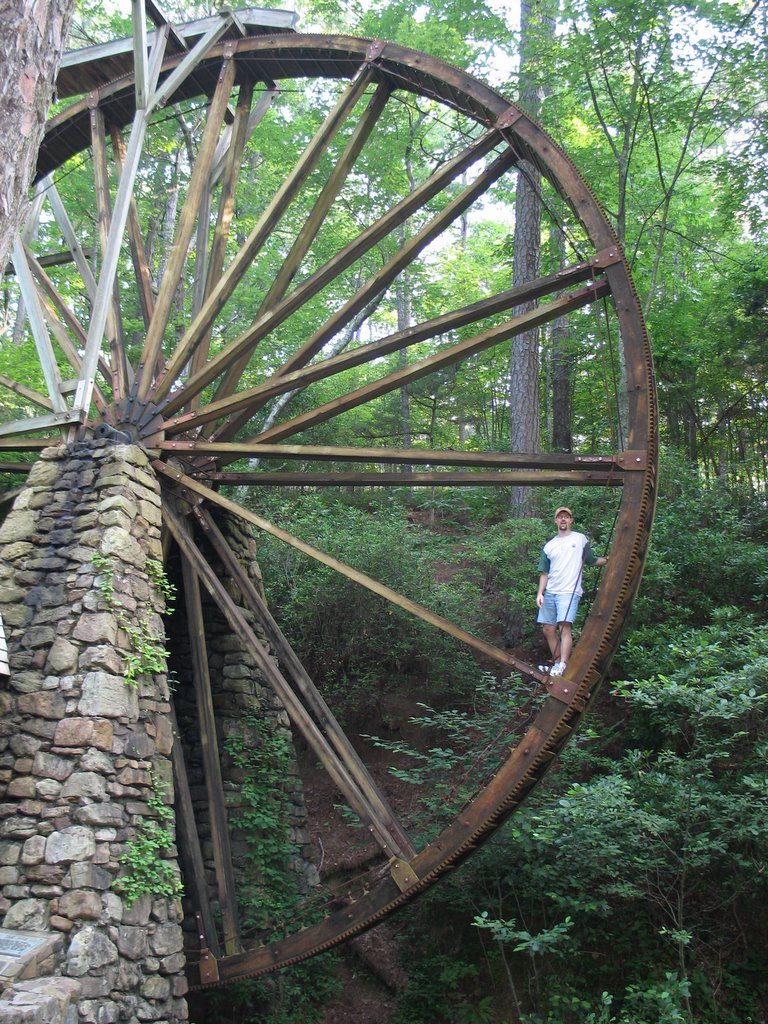 It’s curious how many things that we find thrilling or enjoyable are also quite risky.
  We've all noticed old and untraveled roads covered with vegetation. It's remarkable to me how quickly nature can swallow up or erase the works of man. All right, so here's a scenario and a question: Every person on the planet disappears or drops dead immediately. How many years would it take before all traces of man's endeavors--from the garden we planted to the Great Wall of China to the Empire State building--would disappear from sight? Thousands? Millions? Billions?
 Here’s a photo of a pepper within a pepper. If that pepper contains a pepper within it as well, how many peppers are in that thing?! (Botanists, please note that this is a rhetorical question.)
  The Greeks thought that the question of "the one and the many" was, at the end of the day, the most interesting (and perhaps only) philosophical question.
 Here is something of a confession: What I found most troubling (by far) about the events of 9/11 was not the loss of life but the collapse of the Twin Trade Towers. That those pillars of steel and concrete could simply disappear within seconds unsettled me terribly. Karl Marx said of society under capitalism that "all things solid melt into thin air." But long before Marx, the book of Ecclesiastes tells us that all things that come from our hands are but "labored for the winds" and that there will be no "remembrance of things that are to come by those who will come after." Some day in the distance, even the stars and sun will shine no more. To think that the magnificent stone buildings in this photo will suffer the same fate as the diaphanous mushrooms in the foreground is indeed a reminder that if we do seek immortality, we best not seek it through our own labours.
 Hell is not mentioned at all in the Old Testament. As I understand Genesis 3, the punishments for our original transgression, some stated, some implied, are these: (1) Shame; (2) Death (along with disease and pain); (3) pain in childbirth; (4) Inequity between the sexes in marriage; (5) Toil instead of rewarding work; (6) and a fallen nature that produces "thorns and thistles". I confess that these punishments strike me as terribly thorough and sufficient. (I smile when I recall that my Reformed tradition informs us that we ought to be grateful for the mercy God demonstrated on that same day.) So why the need for Hell, that is, everlasting pain and anguish on top of these originally-stated punishments? Virtually no person in the New Testament writes or speaks of Hell at any length save one: Jesus. That our Lord speaks so frequently of Hell is reason enough for me to believe in it, but everything else in Scripture prompts me to believe that we can trust that Hell's role is for justice and not cruelty, and the language Jesus employed to describe Hell was designed for us to take it seriously, not because it is a literal description of the "place."
 Ancient Greek philosophers believed that the world has value even without a personal God intervening in human affairs. Christians believe that life and the world more generally receives its value from behind, lit, as it were, by a great sun. The Greeks believed, by comparison, that the world is self-illuminating. This is one reason Christians see atheism in such stark, almost hysterical terms: They find it hard to believe that life has any meaning at all without the Divine backlighting. In this sense, Nietzsche, Sartre, and other existentialists are in spirit more Christian than Greek; they buy into the Christian premise that life without a God is nihilistic. The Greeks seemed to have believed that seventy years of life is worth, at least, something. C.S. Lewis would agree with the Greeks but point to our yearnings for eternity to show how, finally, the Greek perspective cannot ultimately satisfy us.
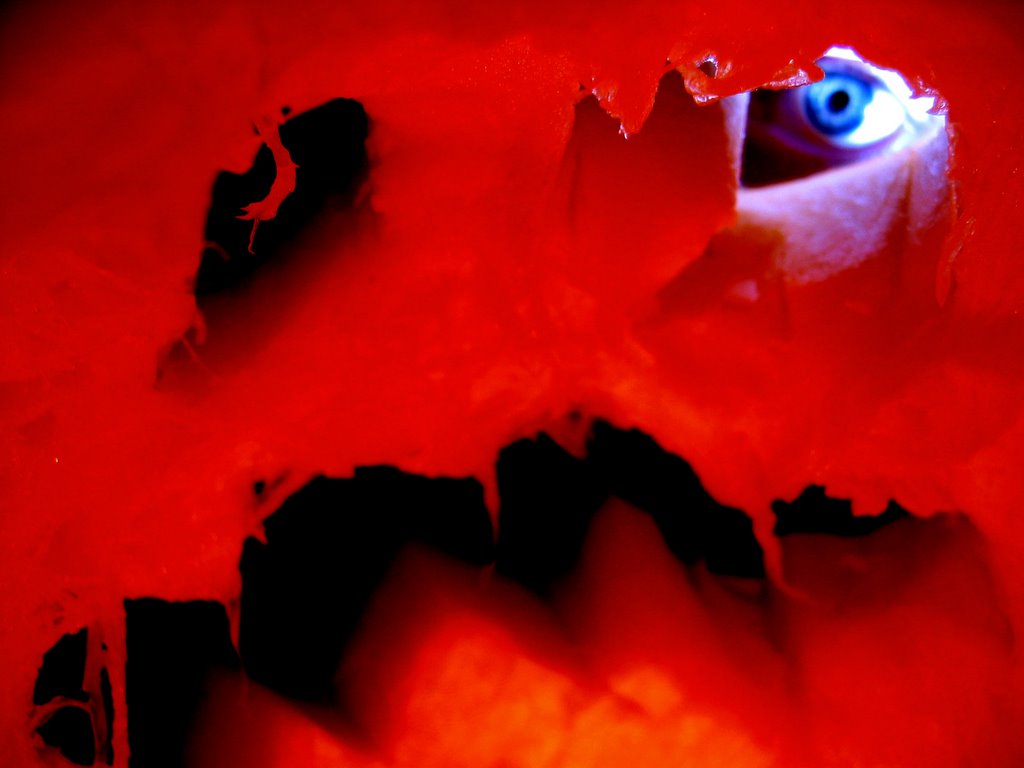 The monsters of other cultures--say, African or Asian monsters--always strike me as at least as comical as they are terrifying. One possibility is we have to be trained into fear, and I have not received the proper training to appreciate the horrors of Asian and African monsters. Another possibility is that what we fear, deep down, is the liminal, that is, that which has one foot in our world—the world in which we live and delude ourselves that we have mastered--and one foot in another world, a world altogether unknown and alien. That which is perfectly alien from our own experience is, well, neutral toward us. It is that which shares something with us that frightens us most: mutants; deformities; a corpse; vampires; speaking beasts, etc. Since African or Asian monsters emerge from a culture whose symbols do not gain traction with us, naturally their monsters seem simply "other" and therefore lack the immediacy necessary for terror.
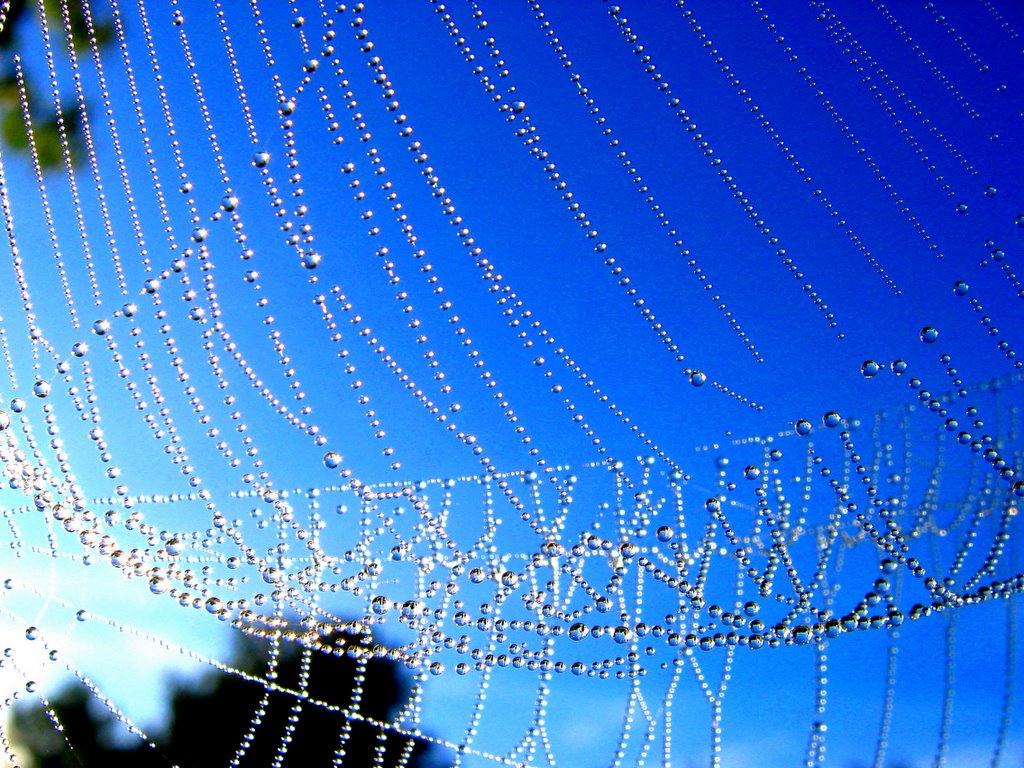 How much of what we find beautiful had its origin in simple functionality?
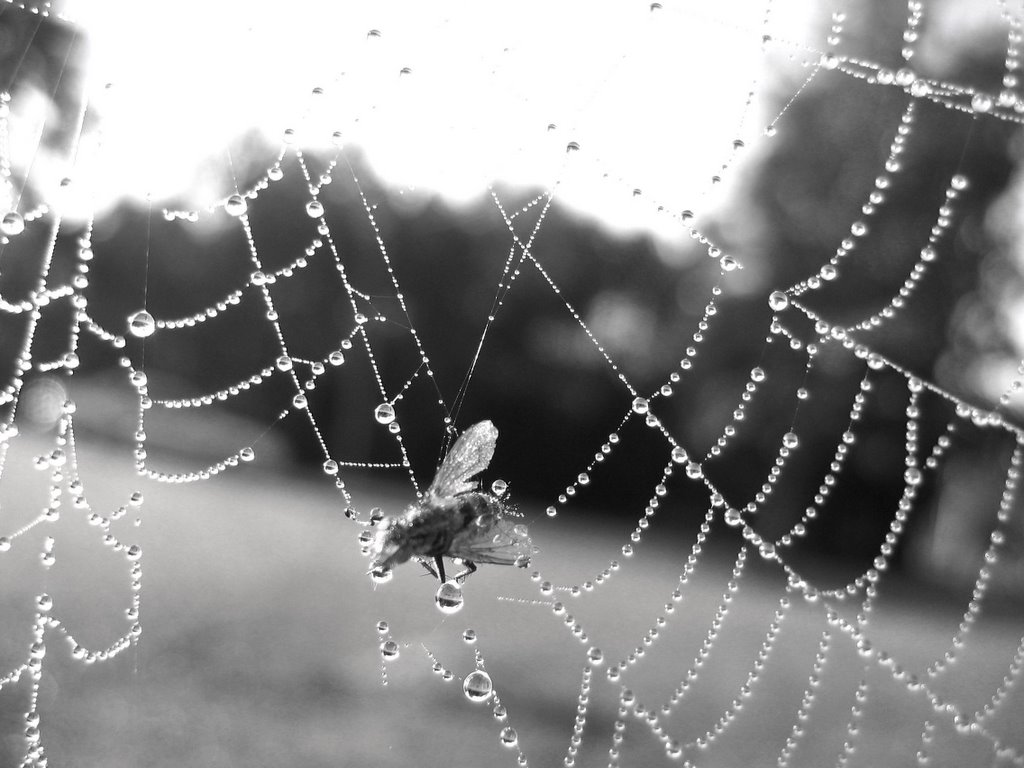 Probably quite a bit.
 One of the chief differences between European movies and American movies is that European movies end realistically--which is to say, sadly. What could be more real than the notion that all of us are born but for the grave? When I shared this "insight" with my students, their reaction was laughter. I could not decide whether their laughter was pure nervousness at the inevitability of their own mortality, or whether it was the laughter of wisdom--a reflection that the grave, in fact, does not define us. It may well be that America's ride-off-into-the-sunset mentality may--just may--reflect our deepest reality more accurately than the Europeans' pessimism.


 Posts
Posts


.jpg)