Friday, May 09, 2008

Evolution: thoughts and questions


A Michigan State poll reveals that within some 32 European nations and the U.S. and Japan, only the Turkish population rejects the idea of evolution at a higher rate than do American citizens. And only in the United States does evolution play a notable role in partisan politics. The scholars who conducted the survey suggest that both religious beliefs and overall scientific illiteracy of Americans (as measured by non-controversial and “objective” standards, such as knowledge of genetics) help explain variation between nations. Moreover, an earlier 2004 Gallop poll found that belief in evolution was correlated with education level more generally. Yet another survey showed that of 73 Biology Department heads, only one characterized evolution as “a scientific controversy” within his or her department. Also, another department head said that one of his department members supported Intelligent Design, but that in general evolution is not a controversy in the discipline. The 71 other department heads firmly held that evolution is not a controversial theory.

Well.

What are we to make of this? There’s little from this data that what we can say about the ultimate truth of evolution. What we CAN say, however, is this. The more one knows about biology—the scientific subject matter of evolution--the more likely one is to embrace evolution as the best evidence-driven model for explaining what evolution and ID and Creationism all purport to explain. Moreover, those who know the most about biology--in other words, those who devote their lives to studying it and presenting their work to others who are similarly committed to it—are nearly unanimous in embracing it.

So the idea of “teaching the controversy” is, um, majorly stupid. I’m speaking literally. I mean both ignorant and foolish. Stupid. Teaching the controversy is almost like giving equal share to moon landing conspiracy theorists and NASA officials in a discussion on space travel. The analogy is an exaggeration, true, but it points us in the right direction.

As a general rule, any controversy about evolution is not between biologists, but between those who study biology and those who do not, as well as between those who are committed to scientific principles (including, yes, its presuppositions) and those persons whose theology or ontology require them to reject out of hand any scientific conclusions that do not square with their interpretation of the Bible. Here’s an example. John MacArthur is a conservative evangelical author whose “The MacArthur Study Bible” has sold over five hundred thousand copies. He also has written “numerous bestselling books” and has “60,000 hours of sermon preparation” under his belt!! He’s the real deal, this one. Perfect evangelical credentials. And here’s what he says about the Genesis account of creation.

“Scientific theories, by their very definition, are subject to change and adjustment. Scripture remains as God’s revealed, unchanging declaration of truth. The Bible was not written as a challenge to any particular scientific theory, but scientific theories have often been designed to challenge or undermine biblical statements. They either agree with Scripture or are mistaken.”

Then he immediately concludes that, according to “the description in Genesis 1:1…creation was a recent event measured in thousands not millions of years ago.”

What he’s saying is that it’s either God or the scientists.

Well, shoot.

Sadly, too many scientists agree with MacArthur's choices. That’s part of the reason why it’s a great big deal in the evangelical community when a celebrated and accomplished scientist such as Francis Collins comes out in favor of God--and even when he or she continues to embrace evolution! (It’s pitiful, really. “Look at us!! We’ve been validated by real science!! We ARE smart after all!! Hooray!”)

A common strategy for evangelical Christians to undermine biblicaly suspect scientific claims is to challenge scientists to explain everything with the information that scientists currently possess. “But where did life come from, Herr Doktor Scientist?.” Or, “how can you believe in evolution when you can’t explain how those first complicated self-replicating protein strands were created?”

But that’s an incredibly dumb strategy for creationists to take because it squeezes God into smaller and smaller arenas for operation. The underlying assumption in these questions finally embraces the atheist scientist’s assumptions: things that can be explained by scientific thinking crowd out a place for God. Therefore by this standard as the world is increasingly explained by science—and, let’s face it, science has discovered and explained frontiers of knowledge that were simply unimaginable a hundred years ago, ranging from relativity to neuroscience—the hooks by which we can hang our faith are disappearing left and right.

But here’s the other problem with this line of inquiry. Scientists are ignorant. Ignorant in a good way. It’s their ignorance that drives their labor, their thought, their research, their waking hours. Honest scientists are not defensive about their ignorance but are willing to come forward with what they are investigating, to admit what they don’t know. Showing that scientists are ignorant is hardly a refutation of their models. What scientists do is explain the world as best they can given what they know using their methodological tools. And evolution is that model that presently explains the world better than any other model. Science is subject to revolution, and it is possible that someday scientists will develop another model that better accounts than does evolution for the reality that scientist are trying to understand.

Here’s my question for biologists. Perhaps it is simply explained; I just don’t know the answer. I would appreciate any biologists out there to throw me a bone here. Here it is. Scientists tell us not to anthropomorphize nature. The moon doesn’t “want” to revolve around the earth. Magnets don’t actively seek out each other. Fine. But about all this replication that is necessary to transmit code, information, or identical molecular structure from one living creature to the next, um, why does it do that? I have a hard time avoiding the Spencer-inspired notion of DNA being purposeful. How can I explain this succinctly? I guess I can't. Hmm…maybe my concern is related to entropy. I’m fumbling for words now. Okay, somehow from that primordial stuff that existed before the emergence of life, complicated molecular structures became assembled. I don’t understand this, but I accept it. (“GASP!! Aha! See, you DO believe what you do on FAITH!!!” Umm..yeah. Duh. But that's a topic for another discussion.) But my question is this: given the tendency for things to break down into their component parts, why isn’t the history of the world an ongoing series of origins and dissolutions, slow beginnings and quick endings? A complicated molecule made now, then a complicated molecule broken up soon thereafter? What made the replication replicate so well? And why did these strands eventually take the form of Tigers and spores and squid? Why not just replicating as long strands of meaningless molecules? Like crystals replicating. We wouldn't think of crystals, no matter how much they replicate, eventually turning into, say, B-2 bombers, right?

Well? Explain that please.

Evolutionist Ernst Mayer says, “Life as it now exists on Earth , including the simplest bacteria, was obviously derived from a single origin.” Why is that so obvious? Really. I don’t get it. If these molecules were made and unmade at the very beginning, as surely they were, then why did one set of self-replicating molecules continue to replicate? Why did this “single origin” strand stick when others did not? Are simple compounds being formed into these complicated self-replicating molecules even today? Why can’t various species trace back to different origins? Evolution is a material process, and it may even be occurring in other planets, so it’s not special in any fundamental way. We’re lucky to have it, but it’s not a miracle. So is it occurring at that most basic level still? I don’t mean from simple processes of molecule assembly already going on within live organisms. I mean from dead stuff to live stuff. Is that happening still? And if not, why not?

Okay, I know I asked the same question about six times.

Now: talk amongst yourselves.

Monday, May 05, 2008

No Country for Old Men


I’m spilling the beans, so look away if you find movie discussions irritating.

"No Country for Old Men." Above all, the movie is a story. It’s not a treatise dressed up in moving images, thank goodness, and it’s not merely a vehicle for a philosophy. It has a plot, and the plot is what carries the viewer through it. The pacing of the movie was perfect—deliberate but always advancing. You care about the characters and you want good for them, and it hurts, badly, when things do not go well for them.

Because they don’t.

The person who watched the film with me said something like, “well, that left everything unresolved.” To which I said, “No. No, it didn’t. It resolved everything. You just don’t like how it was resolved.” I was in a snotty mood. Because I didn’t like how it resolved, either. The film pissed me off because I agreed with its view of things.

Because it didn’t end with the ending we were hoping for, yearning for. Or emotionally banking on.

The plot was powerful and riveting, true, but the film was good in many ways as well. The acting and dialogue, excepting Woody Harrelson’s ridiculous attempt to chew up the scenery, was brilliant. The cinematography was as good as Fargo's. Those Coen boys love the open shot that practically slaps you in the face with existential despair and beauty. The spare and open spaces echoed the musical score, which was nonexistent apart from a background hum now and then. The quiet in the film underscored the loneliness that’s never more than a step or two from all of us.

Though the movie is first and foremost a story, it also suggests a “view of things” if not exactly a philosophy per se. My movie partner said something like, “the Coen brothers have such a negative view of life.” Well, I’m not so sure. When I think of a negative view of life what comes to my mind is a cynical view of life, a cynical view of love and friendship and the goodness of human beings, of their worth. My sense is that the Coen brothers champion love and friendship and connections. Though not cynical, their view is dark. They see these good things as fragile, as always threatened by forces bigger than individuals.

The movie explores (reveals?) our smallness in the face of forces bigger than ourselves. Random forces. Inexorable forces. Inexorable forces because they are random. Random not in the sense that they are not predictable when taken from a cosmic scheme, but random in the sense that one cannot predict their occurrence to any individual or their mode of occurring. That we will die is predictable, but that we will die in our dining room during breakfast when a massive sink hole swallows up our house is not so predictable. (By the way, that’s a true account I read on CNN about a California man just over two years ago. Okay, I embellished. I don’t know that he was eating breakfast. But he was in his dining room in the morning. It could have happened.)

The universe is simultaneously determined at the macro level but also freaking random from the perspective of our dreams and life chances. We are fragile. Our soft flesh gives way to sharp objects just about every time. Like those Twin Towers, sometimes it takes twenty minutes or less for worlds to collapse.

The bad guy in the movie, Anton Chigurh, is unironic and therefore he is both perfectly detached and engaged at the same time. He means what he says, and therefore what he says seems puzzling to us, we who are used to speaking in code to one another. His commitment is to the task at hand and to the task alone. In that sense he’s a little like the Orcs in the Lord of the Rings Trilogy (which were one of the few things in those awful movies that I found interesting. Well, the Orcs, the human dude, and Liv Tyler, who I found riveting for wholly different reasons.). The world becomes objectified in Chigurh’s task. Everything becomes objectified. And everyone. The things that set us humans apart from the gravel in the road—our wishes and yearnings and first loves and fears and secret shames and bodily itches and the hilariously painful memories of missing ten straight free throw shots in an 8th grade game—well, none of these things count for squat in determining our ultimate fate when we face Chigurh.

The bad guy doesn’t so much represent anyone as he just is. He’s not merely a “symbol,” but he reveals or stands in for the uncaring nature of the universe. And the universe may have a bias toward life, as Bishop Spong says, but Mother Nature can also be a remarkably rotten mother. And maybe there’s a great omniscient power pulling all the strings, a Great and Powerful Oz behind it all, but the universe that Oz manipulates, the one in which we live, doesn’t care a whit about us.

Magnolia, Paul Thomas Anderson, and Symbolism


I hereby commence my rant. None of this will make sense if you haven’t seen “Magnolia” or “There Will be Blood.”

That Paul Thomas Anderson (director of Boogie Nights, Magnolia, and There Will be Blood) is really beginning to tick me off.

Anderson sure likes Christian symbolism. Daniel Day-Lewis’ character in “There Will be Blood,” Daniel Plainview, is a proxy for Satan. The whole movie was a kind of spiritual warfare type of movie. I found the movie’s Christian symbolism and parallels between Christ and Daniel Plainview’s anti-Christ sort of fun to note because they made me feel smart when I caught them. But that was pure vanity; they were anything but subtle. So finally I found them irritating. Though Daniel Day-Lewis is my boy, “There will be Blood” is ham-fisted in its symbolism, a symbolism that does little to advance or improve the story.

But at least it was better than “Magnolia,” one of the most overrated movies of the past few decades.

Sigh. How to start?

Kurt Vonnegut describes Kafka’s “Metamorphosis” as the only story that begins perfectly grim and then, step by step, just gets grimmer and grimmer. “Magnolia” follows the same pattern right up until frogs fall out of the sky. Anderson brings a Calvinist sensibility, if not a Calvinist ontology, to the movie. (Thomas was raised Catholic, however. Thank you, Wikipedia.) Calvinism holds that grace is completely unearned and also efficacious, which is to say that it’s pretty much irresistible. If god wants you to be saved, well, you’re gonna be saved whether you want it or not. It’s not “thy will be done,” but “You’d better believe thy will be done.”

So it’s sort of like this. Calvinism suggests that things go to the crapper because it’s in the nature of things to go to the crapper—the worlds is in bad shape and it will just get worse. Which is a different view from, say, Catholicism, which holds nature to be majorly screwed up but still pretty good. Like Montgomery Clift’s face after that car accident. Calvinism holds that it takes a supernatural departure from the nature of things for good to emerge. And that’s just what Paul Thomas Anderson not so subtly suggests in “Magnolia.” In Anderson’s obsessive Biblically symbolic world, that damn plague of frogs is just what the good doctor ordered. Insert miracle here. Dismal lives turn around. Very Calvinist, that Anderson.

My problem with it is that none of it feels right. The only possible reason in the world to advance a Calvinist view of anything is because one believes it to be true. I doubt that Anderson is a real Calvinist, by which I mean the kind that believes in God. And I also don’t sense that Paul is working through any real problems, whether emotional or theological or ontological. He doesn’t seem tortured to me at all. His movies have the feel of a director who feels like he ought to feel tortured because all great geniuses are tortured. And he’s a genius, so…..

You get the drift.

The guy likes Christian symbolism, and that’s fine. Those who know me might think that I would find Christian symbolism appealing. And I do, I suppose. I like Christian symbols, however, when those symbols don’t start and end with themselves but purport to point to something real, something true. Whether or not they really are true, they are more powerful when they are taken seriously as possibly true. Daniel Day-Lewis’ character begins and ends with him. There’s no pointing going on at all despite the “flood” of Christian symbolism. Satan only makes sense if there’s a God to rebel against, but there is no God in “There Will be Blood.” Similarly, “Magnolia’s” plague of frogs is literally incredible. It’s a triple scoop of cinematic irony that banks on the viewers’ unwillingness to point out that the emperor has no clothes.

I hereby close my rant.

Ribbet.

of course i'm definitely an excellent driver. definitely.

A photo of a mug and glass.

At one point in the movie Rain Man, Dustin Hoffman's character is sitting in the waiting room of the doctor's office while his brother is talking to the doctor about Rain Man's condition. It's a beautiful and very sweet scene, and I especially love it because I relate to both of the main characters in the waiting room. The first character is a sweet and harmless older man (a retired teacher?) who is droning on endlessly about arcane local historical events and their meaning. The other character is Rain Man, the ostensible audience for the lecture. Rain Man, however, is completely oblivious to the lecturer and is lost in his own world of taking random pictures with his Polaroid camera, including taking a picture of the first character's shoes.

Both characters are contentedly lost in their own worlds, and both characters are merely props or occasions for satisfying the other's largely internally-centered needs. Not to say that this kind of dynamic defines my world comprehensively, because it doesn't. But I can also say that there have been (plenty of) occasions in which people have been talking to me and I get a little lost in my own internal monologue. What I'm secretly thinking is, "Ooh, I really like that hand gesture of his. I wonder whether that was an affectation or a natural move, a habit when he speaks." Or, "hmm....his nose or throat makes a clicking noise when he speaks. Can he hear that? Is it controllable? Is it a function of his breathing, or of psychological tension? Does a feeling just build up in his throat that he has to release? I wonder what habits I have that I'm oblivious to that annoy others when I speak. Why is that sometimes stutterers can speak without a stutter when they approach orgasm? What’s up with that? Why can I look people in the eye when they're speaking to me, but when I'm speaking to them I have to look away or otherwise I lose my train of thought? Is that normal, or do I need to see a psychiatrist for that? Oh man, that film I saw of myself speaking that one time was so embarrassing. Surely that was an off moment. Oh, it wasn't. Who am I kidding? I'm disgusting when I speak. And my voice. (Shutter.) How can anyone hear my voice and not run away? And that videotape of my golf swing that Tom Hornack took. I thought I looked like Tiger before I saw that video. Man, turns out I looked like the Hunchback of Notre Dame trying to club a squirrel. I wonder whether he'll let me take a picture of his hand. Why is it that people freak out when I ask to take a picture of their hands? Isn't it a compliment? Are their hands not to be seen? Or is it they don't want their hands frozen in time, like their hands will lose their hand souls? Then why not wear gloves if they're so private? Hmm....when women used to wear more modest clothes and one caught a glimpse of their ankles, did that spark erotic fantasies in the men who glimpsed them? And what was an ideal ankle? Was it the skin tone? A pleasing skeletal structure? Those women who wear burkas. You can't see anything but the eyes of the women wearing those things. Are the bridges of their noses a kind of turn on for men? I'm not Islamaphobic, am I? I mean, do burkas really have anything to do with religion directly? Or is it just a regional thing? No, Muslims women wear burkas in France. And I’ve seen them in Walmart here. Well, it is related to religion then. Why don’t I know more about Islam? I’m so ignorant in so many ways. What a fraud I am. And the burka-intensive culture has to be a frustrating culture for transvestites. Oh no. I hope that wasn't bigoted to think. And why are all my thoughts running in this prurient direction this morning? Why can't Protestants have confessionals like the Catholics? Didn't the Lutherans used to have confession as a sacrament? Could I confess sins to a Priest who didn't believe what I was thinking was a sin? Oh no, I better nod about right now. What was he saying??? Oh no."

Nod.

Saturday, May 03, 2008

get some perspective, pt. 1


acting your shoe size is okay in this case, i think. (i think this photo was taken in 2004. i promise you, technoprairie, not to reveal the model's identity.)

Get some perspective, pt. 2


Today is gone. Today was fun.
Tomorrow is another one.
Every day,
from here to there,
funny things are everywhere.

Friday, May 02, 2008

down below


under the bridge

emerge


My children and I met these friendly young people who kindly allowed me to take their pictures as they explored the drainage area of the waterwheel pond. They were at ease throughout and were without affectation. Extremely nice kids.

Wednesday, April 30, 2008

Little Johnny


No birth date. No date of death.

everything else is details....


except for Peter Reagan and a few others who knew him, all of whom are now long dead and forgotten.

Monday, April 28, 2008

ceiling in black and white


Does this photo engender more unease or tranquility?

Saturday, April 26, 2008

artwork on our refrigerator door

aren't my children talented!

okay, so i collect magnets, especially when i travel (i confess). it's a low-brow activity in support of middle-brow museum gift shops designed to subsidize high-art. so in buying these magnets i'm practically a modern Medici!!!

i want to point out a particular painting here (or magnet of a painting), but i feel very (what is the manly word for "vulnerable"? "exposed"? no, very bad choice)....very....confessional in doing so. It's St. Ceclia by Guido Reni. Unfortunately in this picture she is partially decapitated. she is at the top and middle of the photo. she’s the pale woman with a turban thingy on her head. she's holding a violin in her hand.

Such a gorgeous painting! The triangular composition (hand to elbow to head back to hand); the gorgeous red and white set against the black background; the impossible lighting; the upward gaze seeking (receiving?) inspiration. Plus I'm a sucker for the pale skin, I must admit. All right. So I know virtually nothing about the meaning of the painting. She's the patron saint of musicians, and that's good enough for me. I love this painting for its beauty, not for its story.

So one thing I'm looking for in my photography is to capture this kind of moment. No, I’m not thirsting for Reni's genius. Photography aint' painting--especially my point-and-click brand of photography. But what I wouldn't give just once to capture (or create or manipulate) an image with this kind of beauty.

Friday, April 25, 2008

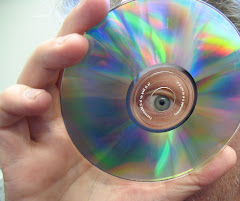
NOT an eyeball


So it turns out that parents influence their kids whether they want to or not. My wife called me early this morning from work. This is how I remember the call; I’ll retell the story if I get the details wrong. She wanted to let me know of a photo collage created by my oldest daughter that was on display at her school. The purpose of the collage was autobiographical--to create a pictorial representation of her personality and interests as selected from magazine photographs. So far, so good. But here’s the thing. Figuring prominently in my daughter’s collage was this:

A photo of a weird eyeball looking through glass. (Not the one above; one from a magazine. This photo, after all, is NOT of an eyeball. It just looks like one. )

So I asked my wife whether her healthy and normal traits could possibly compensate in our children for my exceptionally eyeball-centric inclinations. To which she replied:

Not a chance.

I’m sorry. I really am.

Thursday, April 24, 2008

statue


i feel like i've posted this before, but i don't want to go through my blog to find out.

think of this photo as an image taken from a movie with a music score. what (kind of) music does this image call for?

Monday, April 21, 2008

pinecones and flower


so here's the kind of photographic eye i have: i didn't even notice the flower when i took this shot. pitiful.

inspired by claude


hey, if i didn't shamelessly steal from the genius of others, i wouldn't have a blog at all.

monkey no. 1


prefers the company of adults, this one. we have this exchange about three times a day.

"what do you mean by that? could you repeat that?"

"actually i was talking to your mother."

"oh. but what DO you mean by that?"

the other girls like to talk talk talk. this one likes to "discuss" stuff.

---

my blog. in general i do not "chronicle" my life with my blog photos. nor do i show my friends and family for the sake of showing them off. usually i have a composition in mind (or see a composition i want to capture) and then i use the people i'm with as "subjects" for the shot. but i guess i'm getting soft. this and the next few pictures depart from that. please forgive me; i promise more brooding pictures in the future. those come easy for me.

monkey no. 2


she's all about the heart, this one. little miss sensitive. in the best sense of the word. can't console this one through reason. just have to be patient and stay there by her side. then in time she consoles herself.

monkey no. 3


last but, trust me, never least. oh, she's sees to that. every day. 24/7. if she weren't so charming, i'm telling you.....

three monkeys


stump and stone

one of those pictures that i like that i doubt will have much appeal to others. i think there's something terribly lonely and sad about this picture.


Saturday, April 19, 2008

Happy about something...


A rare "in the moment" photo for me. Ahhhhh.....Harvey, we love you.

Truck on I-70 in MO heading west


I've just got to say that as a father of three young children how much I appreciate this gentleman for providing me and all parents with the opportunity to introduce the issue of abortion to their young children in such a thoughtful and sensitive way. Displays of deep and inspiring love of this nature are always the most persuasive kind of argument, I've always said.

Thursday, April 17, 2008

lamp on the Kansas City Plaza


Kansas City Plaza, pt. 2,


sculpture outside KCMO Public Library, 5:10 a.m.


Nelson-Atkins Museum of Art, 5:00 a.m.


Achingly beautiful and heartbreakingly lonely.

Reflections of Times Square


word of warning: don't mess with Episcopalians


I was reminded by one of these guys no less than three times that this was an Episcopalian Cathedral.

Which I took as self-evident because it was empty.

Decapitated Head of Evil Angel and Harvey’s Head


Harvey is on the right.

door


Saw this grafitti on a door (obviously) just outside of Chinatown. I was struck by its beauty and took this shot. It's lovely, I think. Just beautiful.

awww....poor atlas.


Look, damn it!

Philosophers sometimes understand themselves as that group of people who through reason alone peer behind the transitory world of appearances to understand things as they really are. Apparently, the ordinary poor slobs who compose the vast majority of humanity live in the world of the cave--the world of appearances—and go about their lives altogether oblivious to the deeper reality that holds up or transcends what they perceive. Through thought alone, philosophers appertain reality as it is rather than as the illusory world of appearances that ordinary folks blithely experience.

Or so they would have us believe.

But I doubt it. My sense is that people naturally and automatically look past appearances to mentally organize and construct their perceptions into meaningful concepts—into “reality.” They do so without the benefit of philosophy. They do so without trying. In fact, they can’t help but do it.

Any toddler can identify a dog as a dog. But asking the toddler to pull back from the concept of doggyness that she is implicitly relying upon to actually describe the difference in appearance that distinguish various breeds of dogs and that distinguish dogs from, say, cats is to ask something of the child that is well beyond its capacity. It seems we understand what a dog is first, and then only later (maybe) can we note what we perceive about that dog that helps us make that determination. Obviously appearances are critically important for us to recognize a dog as a dog, but it’s remarkable how much variation of appearances allow us to still recognize a dog as a dog. Dogs have legs, true, but most of us can still recognize a two-legged dog as a dog. When I was a boy I was traumatized by seeing a decapitated dog with its head on one side of a railroad track and the body on the other side of the rail. Looking back now at that horrible discovery, I note that when I was looking only at the body I knew the dog was a dog. And looking only at its poor severed head, I knew the dog was a dog. I had never seen a headless or bodiless dog before, but I still recognized it as a dog.

What’s interesting is that by ignoring appearances and going directly to what the thing is (the goal of philosophy) we run the risk of distorting the thing itself. Consider how a child draws a piano. She’ll use one color—black—and basically draw a blocky outline of a piano and then fill in the spaces with a uniform blackness. But then if one looks at a piano as one would find it in a concert hall, one does not see just blackness. One sees odd sheens of light and bizarre and ever changing reflections. True, the piano’s blackness can be seen, but for as much as we see the blackness in the piano we think of it as black simply because we block out what we actually see and allow our concept of the piano to guide our mental constructions.

In so doing we distort the reality of the thing we think we understand. God doesn’t do that. At least most of the time he doesn’t. Psalm 147 says that God names all the stars. Now that’s understanding each thing in an individual way. Persons can’t do that. It takes considerable education in astronomy for a person to understand how differences within stars make a crucial difference for how they behave. That God names each of the stars reveals his staggeringly powerful mind, but making distinctions based upon appearances is even hard for him. For example, in Leviticus Chapter 11, we are told of God’s rules concerning the eating of unclean birds:

"And these are they which ye shall have in abomination among the fowls; they shall not be eaten, they are an abomination: the eagle, and the ossifrage, and the ospray, And the vulture, and the kite after his kind; Every raven after his kind; And the owl, and the night hawk, and the cuckow, and the hawk after his kind, And the little owl, and the cormorant, and the great owl, And the swan, and the pelican, and the eagle, And the stork, the heron after her kind, and the lapwing, and the bat."

Okay, so everyone goofs from time to time.

In contrast to philosophy, which discounts the world of appearances, art—especially contemporary art—invites the viewer to attend carefully to what the viewer is seeing. It invites the viewer to not move hastily to a general glib understanding of the thing, but to attend to the particulars of the thing. In interpreting a piece of art (here I’m thinking of paintings in particular) the first thing the interpreter should do is stop, pause, and simply look. She should note what she is seeing and not jump immediately to its “deeper” meaning for what it signifies. What drives so many people “batty” (sorry) about contemporary art is that sometimes (but not always) it does not ask the viewer to look beyond itself for the purpose of telling a story or conveying an idea or making a statement beyond the art world itself. Sometimes (but not always) the artist attempts to prompt the viewer to simply look at the art itself, to appreciate form independently of function. To appreciate it as a composition. Therefore at least to some degree an important goal of the contemporary artist is to simply bring people down back into the cave because, damn it, there’s interesting things going on down there.

Appearances are worth attending to because our senses are worth attending to. We are embodied, and we should have less shame about our perceptions than what philosophy would have us feel. And in fact distinctions of appearance between things matter. Without noting those distinctions, we cannot fully appreciate the mind-boggling variety and diversity of creation itself.

The photo. One thing I love about going to a large city like Chicago or NYC is the remarkable degree of visual replication one sees. Not exactly replication because that would be boring. But visual echoes. Building after building towering over us. And with so much reflective glass one looks into a building and sees what’s behind oneself. We can see the same building by looking in four different directions. It’s fabulous and exhilarating. And yet without the benefit of engaging in platonic dialectic we immediately and effortlessly train our eye to look past these reflections, these images, to see the “real” thing we’re looking at, the building I can touch with my hand. Like painting, photography requires that the photographer be mindful of images and appearances—in effect, to visually convert the three-dimensional world that our mind constructs to the two-dimensional world that we see. Both this photo and the photo below were made by pointing the camera into a window. The “mask” and other objects are inside the building that I’m facing; Harvey and the cars and images of buildings and the sky are “behind” me and captured by the reflection in the window.

No one who was there when I took the picture would mistake Harvey for being on the other side of the window. In fact, most of the time Harvey’s image in the window would be effectually “invisible” to us; we would screen that image out. The mind constructs “reality” fairly effortlessly. Where we need training is not in the realm of philosophy but in the realm of looking.

Harvey reflected in NYC glass


between the pews


St. Bartholomew Cathedral, NYC. it bothers me that this photo is leaning slightly toward the right. actually i find taking a properly vertical photo a real challenge. here i put the camero on the ground and hoped for the best.

Wednesday, April 16, 2008

too many prayers to satisfy


and if you don't believe that then look around.

inside the church


angel


This is one of the more "painterly" photos I've taken. It comes as close as anything I've done to capturing the chiaroscuro effect I aim at so often and that moves me so deeply. I took it in a cathedral in NYC. Sadly, I can't remember its name with certainty. St. Bartholomew Cathedral, I believe. See below to see the room in which I took the picture.

here's the room


in which I took the picture in the previous post. It's not an interesting picture in itself. I show it here to demonstrate how I try to make choices in photography. The room had a lot of photographic possibilities--it was perfectly solemn and even a little spooky--but I decided in the end that I wanted to focus on the angel alone. I blocked the lamp with the angel to create a halo effect, or at least the sense of self-illumination. I like the result. I also took a shot or two of the chair and the angel to reveal the loneliness of the place, but I couldn't quite pull off what I was intending.

hallway


columns


edifice


fire escape


Maundy Thursday


Celebrated with a friend by sitting in a warm and lovely Catholic Church in the dark evening, watching the blessed faithful pray on their knees, and quietly reflecting in peace and without irony upon the fundamental goodness of life.

Then we continued our exercise in gratitude, again without irony, by grabbing a couple of cold ones at a local pub with thoughtful and witty friends. A blessed evening indeed.

posed shadow


John--a gentleman (sometimes) and a scholar (always).

evening light through the front door


evening bach