hey, if i didn't shamelessly steal from the genius of others, i wouldn't have a blog at all.
Monday, April 21, 2008
monkey no. 1
prefers the company of adults, this one. we have this exchange about three times a day.
"what do you mean by that? could you repeat that?"
"actually i was talking to your mother."
"oh. but what DO you mean by that?"
the other girls like to talk talk talk. this one likes to "discuss" stuff.
---
my blog. in general i do not "chronicle" my life with my blog photos. nor do i show my friends and family for the sake of showing them off. usually i have a composition in mind (or see a composition i want to capture) and then i use the people i'm with as "subjects" for the shot. but i guess i'm getting soft. this and the next few pictures depart from that. please forgive me; i promise more brooding pictures in the future. those come easy for me.
monkey no. 2
monkey no. 3
stump and stone
Saturday, April 19, 2008
Truck on I-70 in MO heading west
I've just got to say that as a father of three young children how much I appreciate this gentleman for providing me and all parents with the opportunity to introduce the issue of abortion to their young children in such a thoughtful and sensitive way. Displays of deep and inspiring love of this nature are always the most persuasive kind of argument, I've always said.
Friday, April 18, 2008
Thursday, April 17, 2008
word of warning: don't mess with Episcopalians
door
Look, damn it!
Or so they would have us believe.
But I doubt it. My sense is that people naturally and automatically look past appearances to mentally organize and construct their perceptions into meaningful concepts—into “reality.” They do so without the benefit of philosophy. They do so without trying. In fact, they can’t help but do it.
Any toddler can identify a dog as a dog. But asking the toddler to pull back from the concept of doggyness that she is implicitly relying upon to actually describe the difference in appearance that distinguish various breeds of dogs and that distinguish dogs from, say, cats is to ask something of the child that is well beyond its capacity. It seems we understand what a dog is first, and then only later (maybe) can we note what we perceive about that dog that helps us make that determination. Obviously appearances are critically important for us to recognize a dog as a dog, but it’s remarkable how much variation of appearances allow us to still recognize a dog as a dog. Dogs have legs, true, but most of us can still recognize a two-legged dog as a dog. When I was a boy I was traumatized by seeing a decapitated dog with its head on one side of a railroad track and the body on the other side of the rail. Looking back now at that horrible discovery, I note that when I was looking only at the body I knew the dog was a dog. And looking only at its poor severed head, I knew the dog was a dog. I had never seen a headless or bodiless dog before, but I still recognized it as a dog.
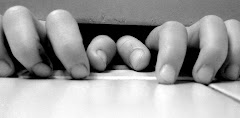
What’s interesting is that by ignoring appearances and going directly to what the thing is (the goal of philosophy) we run the risk of distorting the thing itself. Consider how a child draws a piano. She’ll use one color—black—and basically draw a blocky outline of a piano and then fill in the spaces with a uniform blackness. But then if one looks at a piano as one would find it in a concert hall, one does not see just blackness. One sees odd sheens of light and bizarre and ever changing reflections. True, the piano’s blackness can be seen, but for as much as we see the blackness in the piano we think of it as black simply because we block out what we actually see and allow our concept of the piano to guide our mental constructions.
In so doing we distort the reality of the thing we think we understand. God doesn’t do that. At least most of the time he doesn’t. Psalm 147 says that God names all the stars. Now that’s understanding each thing in an individual way. Persons can’t do that. It takes considerable education in astronomy for a person to understand how differences within stars make a crucial difference for how they behave. That God names each of the stars reveals his staggeringly powerful mind, but making distinctions based upon appearances is even hard for him. For example, in Leviticus Chapter 11, we are told of God’s rules concerning the eating of unclean birds:
"And these are they which ye shall have in abomination among the fowls; they shall not be eaten, they are an abomination: the eagle, and the ossifrage, and the ospray, And the vulture, and the kite after his kind; Every raven after his kind; And the owl, and the night hawk, and the cuckow, and the hawk after his kind, And the little owl, and the cormorant, and the great owl, And the swan, and the pelican, and the eagle, And the stork, the heron after her kind, and the lapwing, and the bat."
Okay, so everyone goofs from time to time.
In contrast to philosophy, which discounts the world of appearances, art—especially contemporary art—invites the viewer to attend carefully to what the viewer is seeing. It invites the viewer to not move hastily to a general glib understanding of the thing, but to attend to the particulars of the thing. In interpreting a piece of art (here I’m thinking of paintings in particular) the first thing the interpreter should do is stop, pause, and simply look. She should note what she is seeing and not jump immediately to its “deeper” meaning for what it signifies. What drives so many people “batty” (sorry) about contemporary art is that sometimes (but not always) it does not ask the viewer to look beyond itself for the purpose of telling a story or conveying an idea or making a statement beyond the art world itself. Sometimes (but not always) the artist attempts to prompt the viewer to simply look at the art itself, to appreciate form independently of function. To appreciate it as a composition. Therefore at least to some degree an important goal of the contemporary artist is to simply bring people down back into the cave because, damn it, there’s interesting things going on down there.
Appearances are worth attending to because our senses are worth attending to. We are embodied, and we should have less shame about our perceptions than what philosophy would have us feel. And in fact distinctions of appearance between things matter. Without noting those distinctions, we cannot fully appreciate the mind-boggling variety and diversity of creation itself.
The photo. One thing I love about going to a large city like Chicago or NYC is the remarkable degree of visual replication one sees. Not exactly replication because that would be boring. But visual echoes. Building after building towering over us. And with so much reflective glass one looks into a building and sees what’s behind oneself. We can see the same building by looking in four different directions. It’s fabulous and exhilarating. And yet without the benefit of engaging in platonic dialectic we immediately and effortlessly train our eye to look past these reflections, these images, to see the “real” thing we’re looking at, the building I can touch with my hand. Like painting, photography requires that the photographer be mindful of images and appearances—in effect, to visually convert the three-dimensional world that our mind constructs to the two-dimensional world that we see. Both this photo and the photo below were made by pointing the camera into a window. The “mask” and other objects are inside the building that I’m facing; Harvey and the cars and images of buildings and the sky are “behind” me and captured by the reflection in the window.
No one who was there when I took the picture would mistake Harvey for being on the other side of the window. In fact, most of the time Harvey’s image in the window would be effectually “invisible” to us; we would screen that image out. The mind constructs “reality” fairly effortlessly. Where we need training is not in the realm of philosophy but in the realm of looking.
between the pews
Wednesday, April 16, 2008
angel

This is one of the more "painterly" photos I've taken. It comes as close as anything I've done to capturing the chiaroscuro effect I aim at so often and that moves me so deeply. I took it in a cathedral in NYC. Sadly, I can't remember its name with certainty. St. Bartholomew Cathedral, I believe. See below to see the room in which I took the picture.
here's the room
in which I took the picture in the previous post. It's not an interesting picture in itself. I show it here to demonstrate how I try to make choices in photography. The room had a lot of photographic possibilities--it was perfectly solemn and even a little spooky--but I decided in the end that I wanted to focus on the angel alone. I blocked the lamp with the angel to create a halo effect, or at least the sense of self-illumination. I like the result. I also took a shot or two of the chair and the angel to reveal the loneliness of the place, but I couldn't quite pull off what I was intending.
Maundy Thursday
Celebrated with a friend by sitting in a warm and lovely Catholic Church in the dark evening, watching the blessed faithful pray on their knees, and quietly reflecting in peace and without irony upon the fundamental goodness of life.
Then we continued our exercise in gratitude, again without irony, by grabbing a couple of cold ones at a local pub with thoughtful and witty friends. A blessed evening indeed.
Monday, March 03, 2008
fractured
Despite what one might conclude from listening to talk radio or from reading our local paper’s editorial cartoons, it turns out that the brain is pretty complicated. Of course scientists have known this for decades. Example: A man endures a horrific industrial accident that lodges an iron spike into his frontal lobe, and from that point on he believes that all cats are really shopping carts. Okay, I made that up. Or he might start to believe that crocs are ridiculous footwear. Okay, that’s true whether or not one has a spike lodged in one’s brain. Let’s not lose focus of the main point, which is that tweaking (or inserting a spike into) the brain reveals how the “self” is knitted together--if it is not altogether illusory—by the interaction of a host of separate parts of the brain.
Here’s an interesting example taken from a book I read recently. A guy suffers a terrible accident (or surgery) that severs his corpus callosum, the part of the brain that connects the two hemispheres. The two spheres each have different functions, and the corpus callosum is the text messaging mechanism between the two halves. Scientists thought it would be revealing to see what life is like for a guy whose two perfectly functioning hemispheres do not communicate with one another. So the scientists decided to have some fun with him. Or should I say with “them.” Because it turns out there were at least two dudes in this guy’s brain.
They covered one of the guy’s eyes and asked him to read a note that told him to “leave the room.” The other side of the brain, the side that deals with purpose and meaning, was left in the dark because its corresponding eye was covered. The man obeyed the note as instructed, but as he was walking out the door the scientists asked the man why he was leaving. And without missing a bloody beat the guy said, “to get a coke.” And the guy believed what he was saying. In other words, the part of the brain that came up with reasons for action acted independently of what actually prompted him to act. The justification came after the action, and yet the self felt like the decision came ahead of time. The scientists concluded that the brain is a remarkably good b.s. artist, and the chief person being b.s’d is ourselves.
Which pretty much rings true for me.
Here’s an interesting example taken from a book I read recently. A guy suffers a terrible accident (or surgery) that severs his corpus callosum, the part of the brain that connects the two hemispheres. The two spheres each have different functions, and the corpus callosum is the text messaging mechanism between the two halves. Scientists thought it would be revealing to see what life is like for a guy whose two perfectly functioning hemispheres do not communicate with one another. So the scientists decided to have some fun with him. Or should I say with “them.” Because it turns out there were at least two dudes in this guy’s brain.
They covered one of the guy’s eyes and asked him to read a note that told him to “leave the room.” The other side of the brain, the side that deals with purpose and meaning, was left in the dark because its corresponding eye was covered. The man obeyed the note as instructed, but as he was walking out the door the scientists asked the man why he was leaving. And without missing a bloody beat the guy said, “to get a coke.” And the guy believed what he was saying. In other words, the part of the brain that came up with reasons for action acted independently of what actually prompted him to act. The justification came after the action, and yet the self felt like the decision came ahead of time. The scientists concluded that the brain is a remarkably good b.s. artist, and the chief person being b.s’d is ourselves.
Which pretty much rings true for me.
angels wings

It required no stretch of the imagination for me to come up with the title for this photo. The photo shows angel outfits I found in a local theater company's dressing room. Now whether the costumes themselves are a stretch of the imagination as a representation of real angels is itself a different question. It certainly prompts a series of challenging questions.
I start with this question: do angels need wings for Heaven or for earth? Or both? Isaiah (I believe) indicates that angels have a bunch of wings. Six, I seem to recall. Which suggests that flight is especially difficult in Heaven--or perhaps that six wings is way cooler than two. (Which is obvious.) But why do angels need them at all? Again, presumably for flying, but why do they need to fly? Where in the world are they going? (Picking up soy milk at the store?) Speaking only for meownself, I can’t help but thinking it would definitely be riveting to watch six-winged angels flying around doing angelic things.
I doubt angels need wings on earth because most stories depict them as popping in and out of our world. They zip in and zip out and don’t do a lot of traveling. Plus, if I were an angel and needed to get from one point to another, say, from a car accident to a Christian music recording studio, I wouldn't fly. I'd pop back into heaven and then pop back down to earth. Sort of like a heavenly Star Trek Teletransporter
But if angels have wings in Heaven, will we? And if we won’t, will we secretly be jealous of the angels? (Answer: yes.) Or worse, will we be like penguins—with wings but still incapable of flight? And if we don’t have wings, will we still have dreams about wanting to fly? Will we sleep at all in heaven? But what if we want to take a nap? Surely naps are part of the R in R.I.P.
See, not all the theological questions have been answered.
Thursday, February 28, 2008
caged
Sunday, February 24, 2008
subterranean homesick alien
Title courtesy of Radiohead. The title was *almost* courtesy of Spinal Tap. I nearly called it "D-minor, the saddest of all the keys." And then that made me think i should call it--i'll make this family friendly--"l.m.l.p."
Sophomoric humor aside, for me this photo evokes terrible sadness and loneliness. Just like the song of the same title.
Sunday, February 17, 2008
learning the moves from the master, johnny robot.
this is the first and only photo i've ever posted taken by someone other than me. I do so because it reveals so nicely why i am indebted to this young man--a man who, despite what you might gather from the photo (or, say, from talking with him), now studies at princeton.
Here’s how life works: i gave him knowledge and wisdom (on, for example, why drummers make the best student workers, or why baptism by immersion is almost like cheating because its symbolism is so obvious it requires practically no faith at all). in return from him i learned how to make computer noises and dance like the white man i am. i also learned this phrase: "conversational tyrant." i will not tell you to whom he applied it. (hint: i'm still bitter.)
Let’s face it: I got the better deal in the bargain.
This is a limited edition posting that will soon be taken down.
Thursday, February 14, 2008
my three little christmas monkeys
like father, like daughter
a keenly developed appreciation of the bizarre.
asking questions until the question answerer goes insane.
a need to qualify every answer with eight counterexamples.
I wonder….where did she get those traits?!? Hmmm….
best of all, she thinks i’m perfectly normal, even terrific!! recently she said, “dad, i know why you like taking pictures of me so much.” (I have taken more pictures of her than any other person.) “it’s because i don’t automatically smile like all the other kids do, isn’t it? it’s more interesting when someone doesn’t smile, isn’t it.”
“That’s my girl!!! Come over here, you!!”
asking questions until the question answerer goes insane.
a need to qualify every answer with eight counterexamples.
I wonder….where did she get those traits?!? Hmmm….
best of all, she thinks i’m perfectly normal, even terrific!! recently she said, “dad, i know why you like taking pictures of me so much.” (I have taken more pictures of her than any other person.) “it’s because i don’t automatically smile like all the other kids do, isn’t it? it’s more interesting when someone doesn’t smile, isn’t it.”
“That’s my girl!!! Come over here, you!!”
my ripe little plum
little miss ornery in the morning
Sunday, February 10, 2008
Subscribe to:
Posts (Atom)